Finding the best scope for under $800 is the "sweet spot" for serious shooters who want professional-grade glass without the four-figure price tag associated with elite competition optics. At this price point, you are no longer looking at entry-level "budget" glass; instead, you are entering the realm of high-definition lenses, reliable tracking turrets, and sophisticated first focal plane (FFP) reticles. Whether you are ringing steel at 1,000 yards or tightening your groups at the local range, selecting the best scope for under $800 ensures you have the mechanical consistency and optical clarity needed for repeatable accuracy. In this guide, I will break down six top-tier options that define value and performance in the modern optics market, helping you identify the best scope for under $800 for your specific shooting discipline.
Top Product List: Best Scope For Under $800
- Vortex Optics Venom 5-25x56 FFP – Best Overall for Long-Range Precision
- Athlon Optics Helos BTR GEN2 4-20x50 – Best Feature-Rich Tactical Scope
- Arken Optics EP5 5-25X56 FFP – Best Mechanical Turret Feel
- Vortex Optics Strike Eagle 3-18x44 FFP – Best for Mid-to-Long Range Versatility
- Sightsmark Citadel 3-18x50 FFP – Best Budget-Friendly Long Range Option
- Athlon Optics Argos BTR GEN2 6-24X50 – Best Value for Entry-Level Competition
Vortex Optics Venom 5-25x56 First Focal Plane Riflescopes
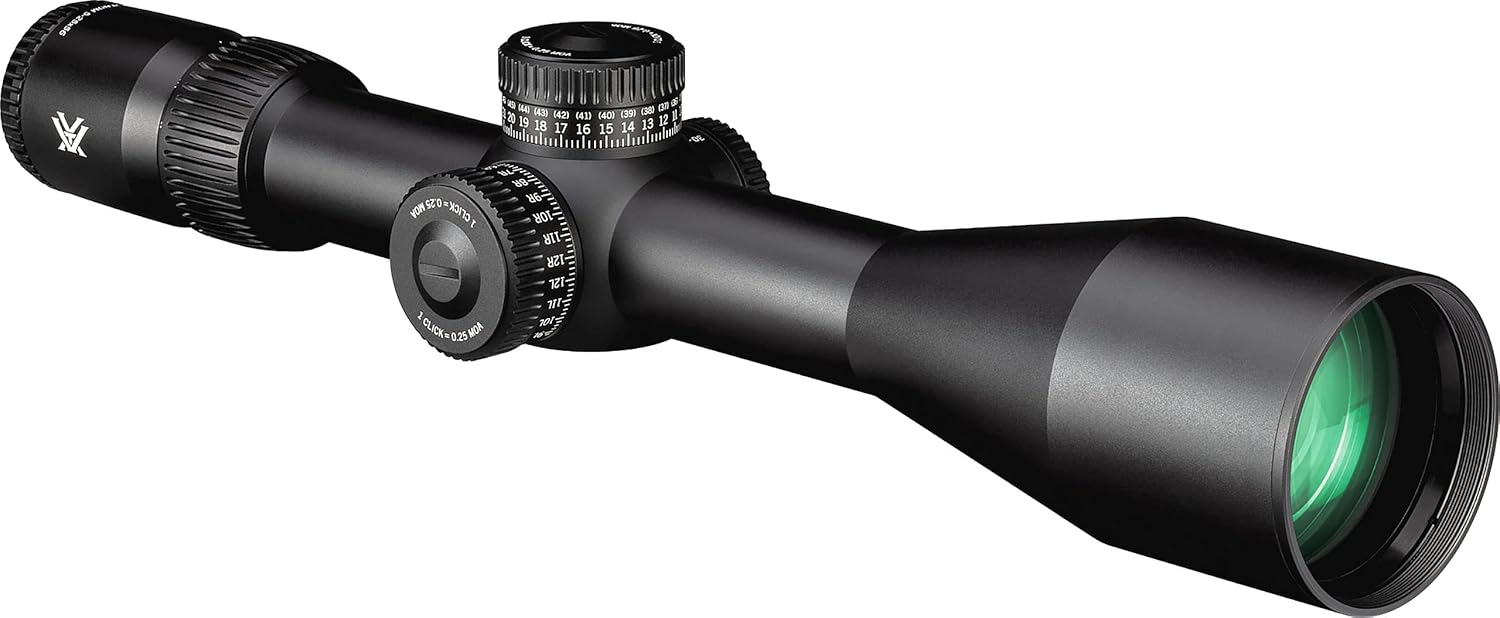
The Vortex Venom is a dedicated long-range optic designed to bridge the gap between the entry-level Diamondback Tactical and the pro-sumer Viper PST series. It features a massive 34mm tube, which is almost unheard of at this price point, allowing for a huge range of elevation adjustment. This scope is built for the shooter who wants to get into PRS (Precision Rifle Series) or NRL22 without feeling outgunned by more expensive setups.
Product Specs
- Magnification: 5-25x
- Objective Lens: 56mm
- Tube Size: 34mm
- Reticle: EBR-7C (FFP)
- Adjustment Graduation: 0.1 MRAD / 1/4 MOA
- Weight: 35 oz
Pros and Cons
- Pros: Incredible 34mm tube for maximum elevation; Includes throw lever and sunshade; Crisp EBR-7C reticle.
- Cons: Quite heavy and bulky; Significant chromatic aberration at 25x magnification.
Glass Clarity & ReticleThe glass quality is surprisingly good for an optic under $800. While it lacks the ultra-premium coatings of the Razor line, the resolution is sharp enough to identify splash on steel at 600 yards. The EBR-7C reticle is the star here; it is a "Christmas tree" style reticle that allows for precise holdovers and windage corrections without touching the turrets.
Eye Relief & Eye BoxAt 5x magnification, the eye box is very generous, allowing for quick target acquisition. However, as you crank it up to 25x, the eye box tightens significantly. You will need a consistent cheek weld to maintain a full clear image at the top end of the zoom range. The eye relief stays steady at about 3.6 inches, which is plenty for most calibers.
DurabilityTrue to the Vortex name, the Venom is built like a tank. It is nitrogen-purged and O-ring sealed for waterproof and fog-proof performance. I’ve used this in light rain and dusty environments, and the seals held up perfectly. The finish is a matte hard-anodized coating that resists scratches well from barricade work.
Elevation & Windage KnobsThe turrets feature the RevStop Zero System, which is easy to set and provides a rock-solid return to zero. The clicks are tactile and audible, though slightly "mushier" than the more expensive Viper series. With 25 MRAD of total elevation, this scope has enough travel to get a 6.5 Creedmoor out past 1,000 yards easily.
Magnification & ParallaxThe 5x to 25x range is ideal for target shooting. The side parallax adjustment is smooth and ranges from 15 yards to infinity, making it a viable option for precision rimfire shooters who need to focus at close distances. The included throw lever makes transitioning through the magnification range effortless during timed stages.
Mounting & AccessoriesBecause of the 34mm tube, you will need specific rings, which can be slightly more expensive. Vortex includes a sunshade and a lens cloth. I mounted mine using Vortex Pro Series 34mm rings on a 20 MOA rail, and the clearance over the barrel with the 56mm objective was perfect.
My Personal ExperienceI mounted the Venom on a Ruger Precision Rifle chambered in .308 Win. During a range session at 800 yards, the tracking was flawless. I performed a "box test," and the reticle returned exactly to the original point of aim. The sheer size of the 34mm tube gives it a professional look and feel that belies its actual cost.
Online Customer CommentsReddit users in the r/longrange community often praise the Venom for its "unbeatable value." Many users mention that while the glass isn't as clear as the Viper PST Gen II, the extra elevation travel and the included throw lever make it a better choice for pure target shooters on a budget.
VerdictAn absolute powerhouse for long-range beginners. If you don't mind the weight, the mechanical features are top-tier.
➡️➡️➡️ Explore User Feedback and Current Pricing on Amazon
Athlon Optics Helos BTR GEN2 4-20x50 Rifle Scope
The Athlon Helos BTR Gen2 is often cited as the dark horse in the sub-$800 category. It offers features usually reserved for $1,200 optics, such as locking turrets and a true zero stop. The 4-20x magnification range is a "Goldilocks" zone—enough power for long range, but low enough for hunting or mid-range tactical applications.
Product Specs
- Magnification: 4-20x
- Objective Lens: 50mm
- Tube Size: 30mm
- Reticle: APLR6 FFP IR MOA/MIL
- Illumination: Yes
- Weight: 27.6 oz
Pros and Cons
- Pros: Locking turrets prevent accidental adjustments; Excellent low-light performance; Very compact for its power range.
- Cons: Reticle can be thin at 4x; Illumination dial is a bit stiff.
Glass Clarity & ReticleAthlon uses Advanced Fully Multi-Coated lenses that provide excellent light transmission. In side-by-side tests at dusk, the Helos stayed bright longer than many competitors. The APLR6 reticle is etched glass and illuminated, making it highly visible against dark targets or in shadows.
Eye Relief & Eye BoxThe eye relief is approximately 3.6 inches. The eye box on the Helos is remarkably forgiving. Even at 20x, I didn't find myself "searching" for the image as much as I did with other scopes. This makes it an excellent choice for shooting from unconventional positions where a perfect cheek weld isn't possible.
DurabilityThe Helos is built from a one-piece heat-treated aircraft-grade aluminum tube. It is waterproof, shockproof, and argon-purged. I have dropped my rifle bag with this scope inside, and it maintained its zero perfectly. The locking turrets add an extra layer of "field durability" by ensuring your dials don't move while trekking.
Elevation & Windage KnobsThe turrets are the highlight. They are push-pull locking, meaning you have to lift them to make an adjustment. The clicks are sharp, loud, and very precise. The Zero Stop system is a simple shim-based design that is foolproof and reliable for returning to your 100-yard zero after dialing for distance.
Magnification & ParallaxThe 4-20x range is incredibly versatile. The side parallax knob is well-calibrated, and the markings are actually accurate to the distances they represent. The image stays sharp through the entire magnification range with very little distortion at the edges of the field of view.
Mounting & AccessoriesWith a 30mm tube and a 50mm objective, mounting is straightforward with standard high rings. It doesn't come with a sunshade in the box, which is a minor annoyance, but it does include high-quality flip-up lens caps that actually stay closed.
My Personal ExperienceI used the Helos BTR Gen2 on a custom AR-10 build. Shooting 168gr Federal Gold Medal Match, I was able to transition between targets at 300, 500, and 700 yards rapidly. The locking turrets gave me great confidence when moving between stations, and the illumination was daylight bright enough for clear midday use.
Online Customer CommentsForum members on SnipersHide frequently recommend the Helos Gen2 as the best "bang for buck" for shooters who want locking turrets. Users often compare the glass quality favorably to the Vortex Viper PST series, noting that the Athlon has a slightly warmer color cast.
VerdictThe most feature-complete scope on this list. If you want locking turrets and great glass, this is the winner.
➡️➡️➡️ Explore User Feedback and Current Pricing on Amazon
Arken Optics EP5 5-25X56 Rifle Scope FFP
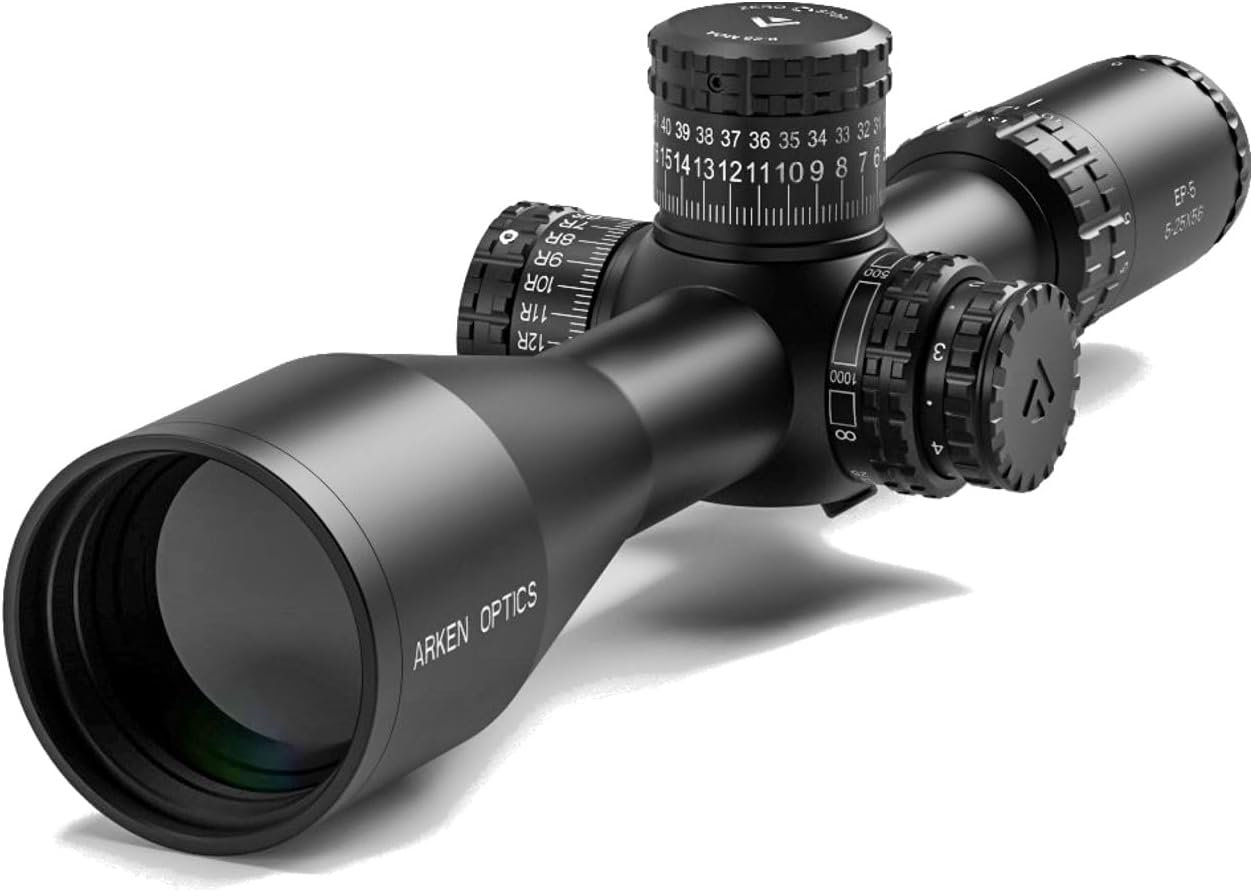
Arken Optics disrupted the market with the EP5 by offering Japanese glass (VHR) and incredibly tactile turrets at a price point that seems almost impossible. The EP5 is a heavy-duty precision instrument designed specifically for the target shooter who prioritizes mechanical tracking above all else.
Product Specs
- Magnification: 5-25x
- Objective Lens: 56mm
- Tube Size: 34mm
- Reticle: VPR FFP
- Glass: Japanese ELD
- Weight: 39.2 oz
Pros and Cons
- Pros: Best-in-class turret feel; High-quality Japanese glass; Very affordable for its specs.
- Cons: Extremely heavy (nearly 2.5 lbs); Limited mounting space on the tube.
Glass Clarity & ReticleThe EP5 uses Japanese Extra-low Dispersion (ELD) glass. The clarity is noticeably better than most Chinese-made glass found in this price bracket. The VPR reticle is clean, with enough information for holding wind without being overly cluttered. Contrast is high, making it easy to see bullet holes at 100 yards.
Eye Relief & Eye BoxEye relief is around 3.74 inches. While the clarity is great, the eye box is somewhat "picky" at 25x. You need to be perfectly aligned behind the scope. However, at the 12-18x range, which is where most target shooting happens, the eye box is comfortable and easy to work with.
DurabilityThis scope is a "tank." It feels incredibly overbuilt. While the weight is a downside for hunters, for target shooters, the mass helps balance a heavy precision rifle. It is fully waterproof and has held up to the recoil of a .300 Win Mag without any internal shifting.
Elevation & Windage KnobsThese are the best turrets you can buy for under $800. They are incredibly "clicky"—the sound is metallic and the tactile feedback is sharp. There is zero play between clicks. The AZS (Arken Zero Stop) is mechanical and very easy to set with the included Allen key.
Magnification & ParallaxThe 5-25x magnification is standard for long-range work. The parallax adjustment goes down to 25 yards, which is decent, though not as low as the Vortex Venom. The magnification ring is a bit stiff out of the box but smooths out with use.
Mounting & AccessoriesThe EP5 has a 34mm tube, so plan your ring purchase accordingly. Arken often sells "combo packs" that include rings, a throw lever, and a bubble level—if you can find one of those, it's the best deal in the industry.
My Personal ExperienceI spent a full day with the EP5 on a Bergara B14 HMR. We dialed up and down the elevation rack over 50 times. Every single time, the scope tracked perfectly. The Japanese glass made a huge difference on a mirage-heavy afternoon, allowing me to see the target through the heat waves better than my shooting partner's more expensive optic.
Online Customer CommentsReviewers on YouTube and Reddit often call Arken the "giant killer." The main consensus is that while the scope is heavy, the mechanical quality matches scopes that cost $1,500. Some users have noted that customer service can be slow, but the product quality is high.
VerdictThe mechanical king. If you don't mind the weight and want the best tracking possible, buy the Arken.
➡️➡️➡️ Explore User Feedback and Current Pricing on Amazon
Vortex Optics Strike Eagle 3-18x44 First Focal Plane
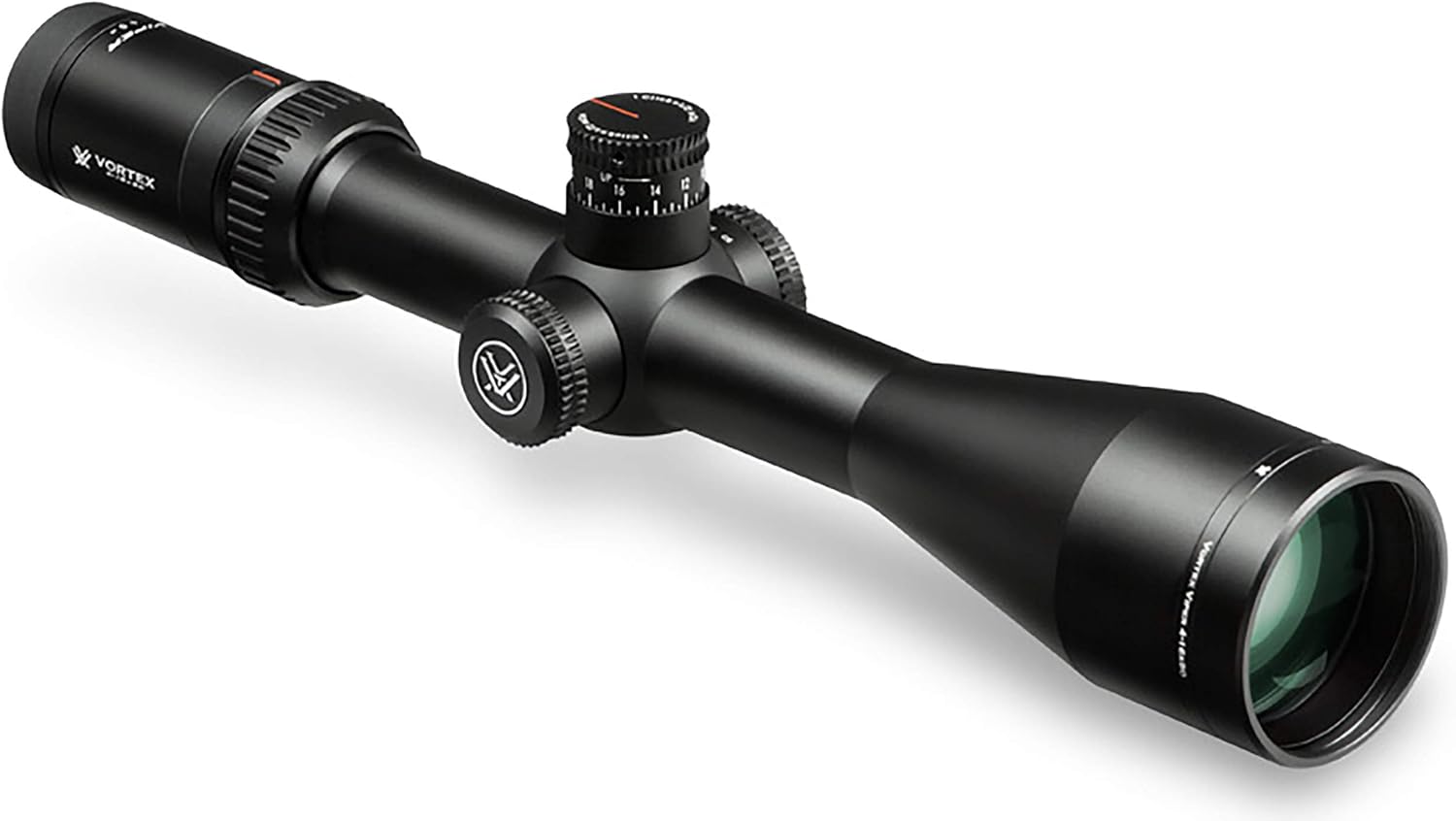
The Strike Eagle 3-18x44 FFP is the versatile sibling of the larger 5-25x model. It is lighter, shorter, and features a more flexible magnification range. It is designed for shooters who need an optic that can handle a carbine course on Saturday and a 600-yard target match on Sunday.
Product Specs
- Magnification: 3-18x
- Objective Lens: 44mm
- Tube Size: 34mm
- Reticle: EBR-7C (FFP)
- Weight: 27.3 oz
- Illumination: Yes
Pros and Cons
- Pros: Great magnification range for versatility; Relatively light for a 34mm tube; Daylight bright illumination.
- Cons: 44mm objective lens collects less light than 56mm models; Turrets are lower profile (harder to grip with gloves).
Glass Clarity & ReticleThe glass is clear and sharp, benefiting from the same optical system as the larger Strike Eagles. The 44mm objective keeps the scope compact, though you lose a tiny bit of brightness at maximum magnification compared to a 56mm lens. The EBR-7C reticle remains the industry standard for tactical FFP use.
Eye Relief & Eye BoxThe 3.7-inch eye relief is generous. Because it starts at 3x, the field of view is wide, making it much easier to use for close-range targets than the 5-25x models. The eye box is remarkably forgiving throughout the entire zoom range, making it a "fast" scope to get behind.
DurabilityIt is built on a 34mm aluminum chassis and is shockproof and waterproof. The Strike Eagle line has been around for years and has a proven track record for durability on gas-operated rifles like the AR-10, which can be hard on internal components.
Elevation & Windage KnobsThe turrets are exposed and locking, which is a fantastic feature. While they aren't quite as "crisp" as the Arken, they are reliable and repeatable. The zero-stop is functional and easy to engage, ensuring you never get "lost" in your rotations.
Magnification & ParallaxThe 3-18x range is perhaps the most useful for "all-around" shooting. It allows for a wide field of view at 3x for close-in work, while 18x is more than enough for 800-yard targets. The parallax adjusts down to 10 yards, making it an incredible choice for air rifles or rimfire.
Mounting & AccessoriesStandard 34mm rings are required. Like other Vortex products, it comes with a throw lever and lens covers. Its shorter length makes it look much more "at home" on an AR-platform rifle than the longer 5-25x scopes.
My Personal ExperienceI mounted the 3-18x Strike Eagle on a 18-inch SPR (Special Purpose Rifle) build. The scope felt perfectly balanced. During a multi-distance drill from 50 to 500 yards, the magnification ring moved smoothly, and the reticle illumination helped me pick up the crosshairs against a dark wooden backdrop in the shade.
Online Customer CommentsMany users on AR15.com prefer this 3-18x model over the 5-25x because of its weight savings and better eye box. It is frequently cited as the best "cross-over" scope for people who hunt and target shoot with the same rifle.
VerdictThe most versatile choice. If you only own one rifle and do everything with it, this is your scope.
➡️➡️➡️ Explore User Feedback and Current Pricing on Amazon
Sightmark Citadel 3-18x50 First Focal Plane Riflescope
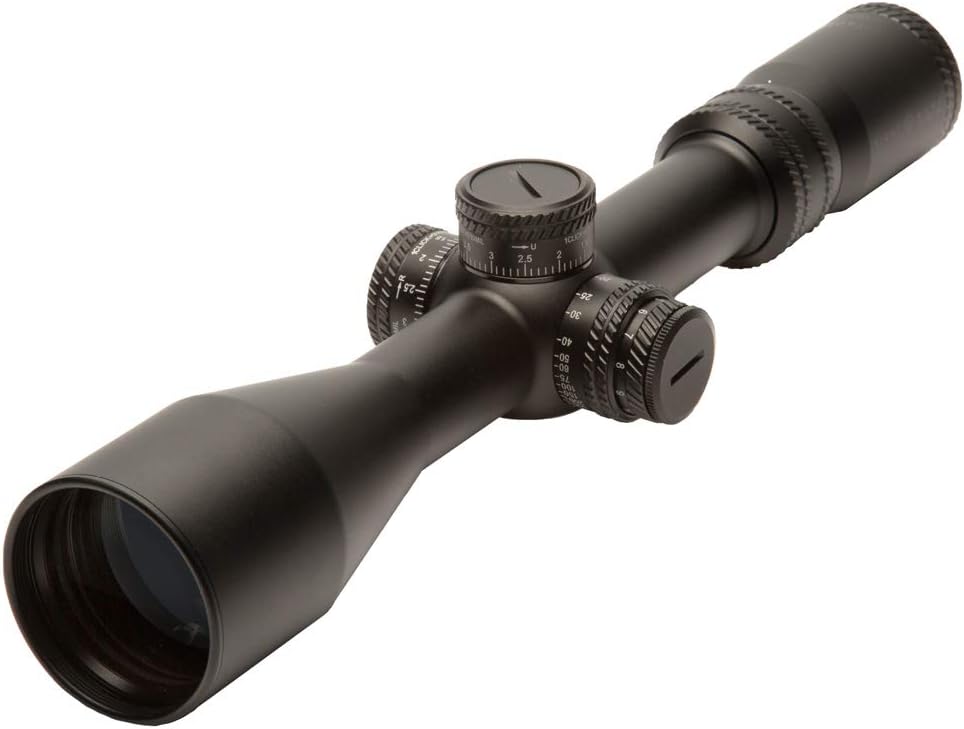
The Sightmark Citadel 3-18x50 is an entry-level contender that often falls well under the $800 budget, leaving you room for high-quality mounts and ammo. It’s a straightforward, no-nonsense FFP optic that focuses on providing the essential features needed for long-distance target shooting without the fluff.
Product Specs
- Magnification: 3-18x
- Objective Lens: 50mm
- Tube Size: 30mm
- Reticle: LR2 (FFP)
- Illumination: Red
- Weight: 26.1 oz
Pros and Cons
- Pros: Very affordable; Includes sunshade and throw lever; Lightweight.
- Cons: Turrets are not as tactile as others; Glass clarity drops off slightly at 18x.
Glass Clarity & ReticleThe Citadel uses fully multi-coated glass. While it doesn't have the "wow" factor of the Japanese glass in the Arken, it is perfectly adequate for target shooting out to 500-600 yards. The LR2 reticle is a mil-hash design that is very intuitive for shooters who are used to the MRAD system.
Eye Relief & Eye BoxEye relief is 3.5 to 3.9 inches. It has a relatively standard eye box—good at low power, tighter at high power. It’s comfortable for bench shooting, though it might take a split second longer to get a perfect sight picture compared to the Vortex Strike Eagle.
DurabilityThe Citadel is IP67 waterproof and dustproof. It’s built to handle recoil up to .338 Lapua, which speaks to its internal robustness. I’ve seen these used on heavy-recoiling bolt guns with no issues regarding reticle shift or internal fogging.
Elevation & Windage KnobsThe turrets are exposed and feature a pop-up locking mechanism. They are functional, though the clicks feel a bit "plastic-y" compared to the metallic snap of the Athlon or Arken. However, they track accurately, which is the most important factor.
Magnification & ParallaxThe 6:1 zoom ratio is impressive for a budget optic. The parallax adjustment is located on the side and is effective at sharpening the image at various distances. It’s a very capable system for someone learning the ropes of long-range ballistics.
Mounting & AccessoriesIt uses 30mm rings, making it very easy to find mount options. Sightmark is generous with accessories, including a sunshade and a throw lever in the box, which adds significant value to an already affordable package.
My Personal ExperienceI tested the Citadel on a .223 Tikka T3x. For a "budget" setup, I was highly impressed with how easy it was to zero. The reticle illumination is excellent—it has several brightness settings that don't bleed out into the rest of the tube, which is a common problem with cheaper illuminated scopes.
Online Customer CommentsOwners on various hunting forums note that the Citadel is a great "workhorse" scope. While it isn't flashy, it consistently holds zero and provides a clear enough image for most civilian shooting needs.
VerdictThe value leader. If you want to spend more on ammo and less on glass while still getting FFP features, this is it.
➡️➡️➡️ Explore User Feedback and Current Pricing on Amazon
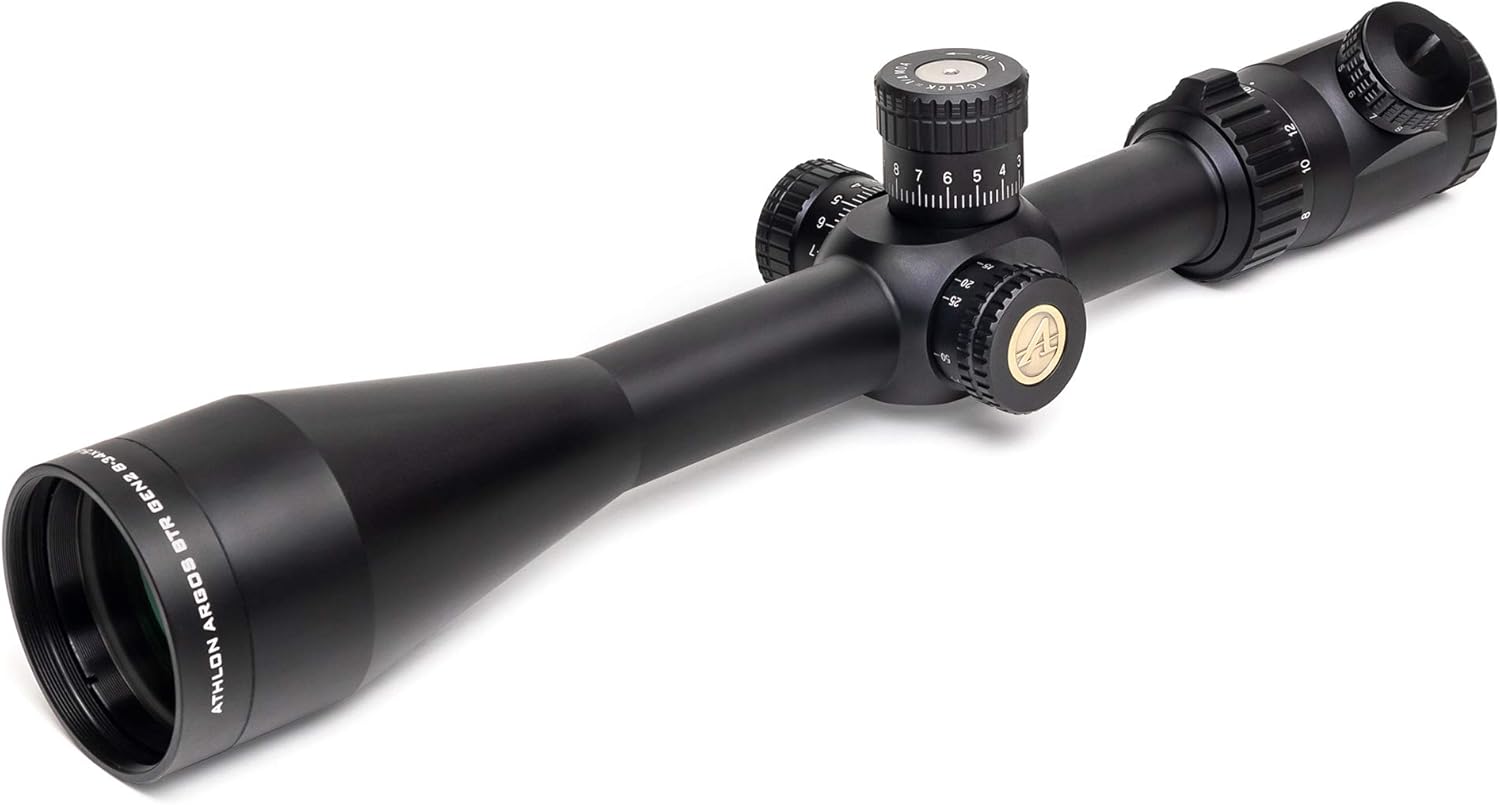
Athlon Optics Argos BTR GEN2 6-24X50 FFP Riflescopes
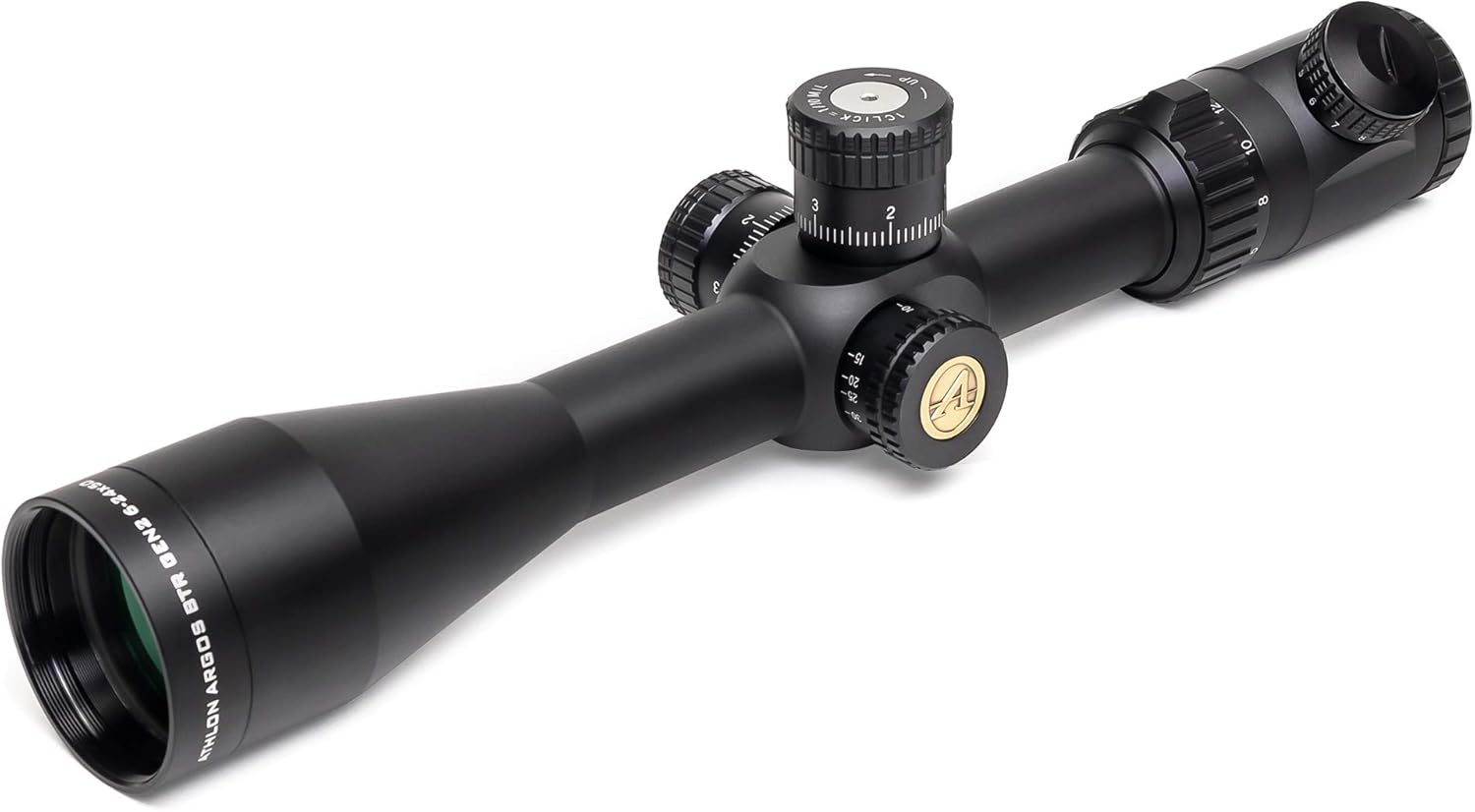
The Argos BTR Gen2 is widely considered the "gateway drug" to precision shooting. It was one of the first scopes to offer FFP, a 50mm objective, and a reliable zero stop for a price that often leaves hundreds of dollars remaining in an $800 budget.
Product Specs
- Magnification: 6-24x
- Objective Lens: 50mm
- Tube Size: 30mm
- Reticle: APMR FFP IR
- Weight: 30.3 oz
- Zero Stop: Precision Zero Stop System
Pros and Cons
- Pros: Incredible price-to-performance ratio; Solid Zero Stop; Good illumination.
- Cons: Turret clicks can be a bit quiet; Some blurring at the very edges of the glass.
Glass Clarity & ReticleFor a scope that often retails well below the $800 limit, the glass is surprisingly decent. It uses the APMR reticle, which features a center cross and a "Christmas tree" for holdovers. The clarity is sharp in the center, though you will notice some "softness" at the edges when looking at maximum magnification.
Eye Relief & Eye BoxEye relief is 3.3 inches, which is slightly shorter than others on this list. This means you’ll want to mount it a bit further forward on your rail. The eye box is typical for a 24x scope; it requires a steady head position at high zoom, but it is very manageable for bench or prone shooting.
DurabilityThe Gen2 improvements focused heavily on the internal turrets and the structural integrity of the tube. It is waterproof and fog-proof. I’ve used an Argos for over two years on a rimfire trainer that gets bumped around in the truck, and it hasn't lost zero once.
Elevation & Windage KnobsThe turrets on the Gen2 are a massive upgrade over the original. They are now much more tactile and include a true mechanical zero stop. While not as "beefy" as the Helos or Arken, they are more than capable of handling repeated dialing for different ranges.
Magnification & ParallaxThe 6-24x range is the "standard" for target shooting. The parallax dial goes down to 10 yards, which is exceptional. This makes the Argos one of the best choices for high-end air rifles or NRL22 competition where you may need to shoot at very close distances.
Mounting & AccessoriesIt features a standard 30mm tube. It does not come with a sunshade or throw lever, but because it is so popular, aftermarket accessories are plentiful and cheap.
My Personal ExperienceI have used the Argos BTR Gen2 extensively on a CZ 457 precision rimfire rifle. In a local competition, the ability to focus down to 10 yards for a "tiny target" stage was the reason I stayed in the lead. For the money, I haven't found a scope that provides a more reliable zero stop.
Online Customer CommentsThe Argos BTR Gen2 has a massive following on the r/longrange subreddit. It is almost always the first recommendation for anyone starting out with a limited budget. Users praise the "bulletproof" warranty and the improved turret feel of the Gen2.
VerdictThe best entry-point scope. If you are brand new to the sport and want to learn how to use an FFP reticle and dial turrets, start here.
➡️➡️➡️ Explore User Feedback and Current Pricing on Amazon
How to Choose the Right Scope For Under $800
Choosing the best scope for under $800 requires a balance between optical quality, mechanical reliability, and intended use. At this price point, you should prioritize First Focal Plane (FFP) if your goal is target shooting or tactical competitions. In an FFP scope, the reticle size changes as you zoom, meaning the sub tensions (the marks on the crosshairs) are accurate at every magnification level. This is vital for holding for wind or elevation quickly.
Next, consider the tube diameter. You will see both 30mm and 34mm tubes. A 34mm tube is generally heavier but allows for more internal room for the turrets to move, giving you more elevation adjustment—crucial if you plan on shooting past 800 yards. If you are building a lighter rifle for "long-range hunting," a 30mm tube might be preferable to keep the weight down.
Glass quality is also a major factor. While most scopes under $800 use high-quality Chinese glass, some (like Arken) use Japanese glass. Japanese glass typically offers better "resolution," which is the ability to distinguish between two close objects. This becomes very important when you are trying to see a bullet hole in a black target at 100 yards or spotting a brown deer against a brown hillside at dusk.
Lastly, look at the turret features. A "Zero Stop" is no longer a luxury at this price point; it should be a requirement. It allows you to dial your elevation for a long shot and then instantly return to your 100-yard zero without having to count clicks or look at the dial. Locking turrets are also a plus if you plan on moving through brush or shooting from a bag where the knobs could accidentally be bumped. Always choose a reticle and turret system that match—either both MOA or both MRAD—to avoid doing complex math in your head while shooting.
FAQs
1. Is FFP better than SFP for target shooting?
Yes, for target shooting at varying distances, FFP is superior because the reticle's hash marks remain accurate at all magnifications. This allows for fast "holdovers" without needing to be at maximum zoom.
2. Can I use these scopes for hunting?
Absolutely. However, be aware that many of these are heavy (over 30 oz). If you are hiking miles in the mountains, you might prefer a lighter SFP hunting scope, but for stand hunting or long-range varminting, these are excellent.
3. What is the difference between MOA and MRAD?
Both are angular measurements. MOA (Minutes of Angle) is roughly 1 inch at 100 yards, while MRAD (Milliradians) is roughly 3.6 inches at 100 yards. MRAD is more common in tactical and PRS shooting, while MOA is often preferred by traditional target shooters.
4. Do I really need a 56mm objective lens?
A larger objective lens (56mm) collects more light and provides a larger "exit pupil," making the image brighter and the eye box more comfortable. However, it requires higher mounting rings and adds weight.
5. Why is a Zero Stop important?
A Zero Stop prevents you from dialing "below" your zero. If you dial 20 clicks up for a shot and then need to go back, you simply turn the knob until it stops. This prevents you from being one full rotation off, which could cause you to miss the entire target.
Conclusion
Investing in the best scope for under $800 is one of the smartest moves a rifleman can make. This price tier offers a significant jump in performance over "budget" optics, providing the mechanical precision and clarity needed to truly push your skills at the range. Whether you choose the turret-clicking perfection of the Arken EP5, the versatile reliability of the Vortex Strike Eagle, or the feature-packed Athlon Helos, any of the optics on this list will serve as a faithful companion on your journey toward long-range mastery. Remember to pair your new scope with high-quality rings and a solid mount, as even the best glass cannot compensate for a shifting base. Happy shooting!