Finding the Best Scope For Under $450 is a challenge that every precision shooter faces when trying to balance optical quality with a realistic budget. In the world of optics, the "sub-$500" category is the most competitive battleground, where manufacturers pack as many professional features as possible into affordable housings. Whether you are punching paper at 100 yards or ringing steel at 600, you need a tool that offers repeatable tracking, clear glass, and a reticle that doesn't obscure your target. In this guide, I have rigorously tested and selected six optics that redefine what "budget-friendly" means, focusing specifically on platforms that excel in target shooting and long-range practice without breaking the bank.
Top Product List: Best Scope For Under $450
- Vortex Optics Diamondback Tactical 4-16x44 FFP – Best Overall for Long-Range Entry
- Athlon Optics Argos BTR GEN2 6-24X50 FFP – Best High-Magnification Benchrest Pick
- Arken Optics SH4 GEN2 4-16X50 FFP – Best Mechanical Tracking and Turrets
- Burris Fullfield IV 3-12x42 – Best Crossover for Target and Hunting
- Vortex Optics Strike Eagle 1-8x24 SFP – Best for Tactical Target Transitions
- Sightmark Citadel 3-18x50 FFP – Best Mid-Range Versatility
Vortex Optics Diamondback Tactical 4-16x44 FFP
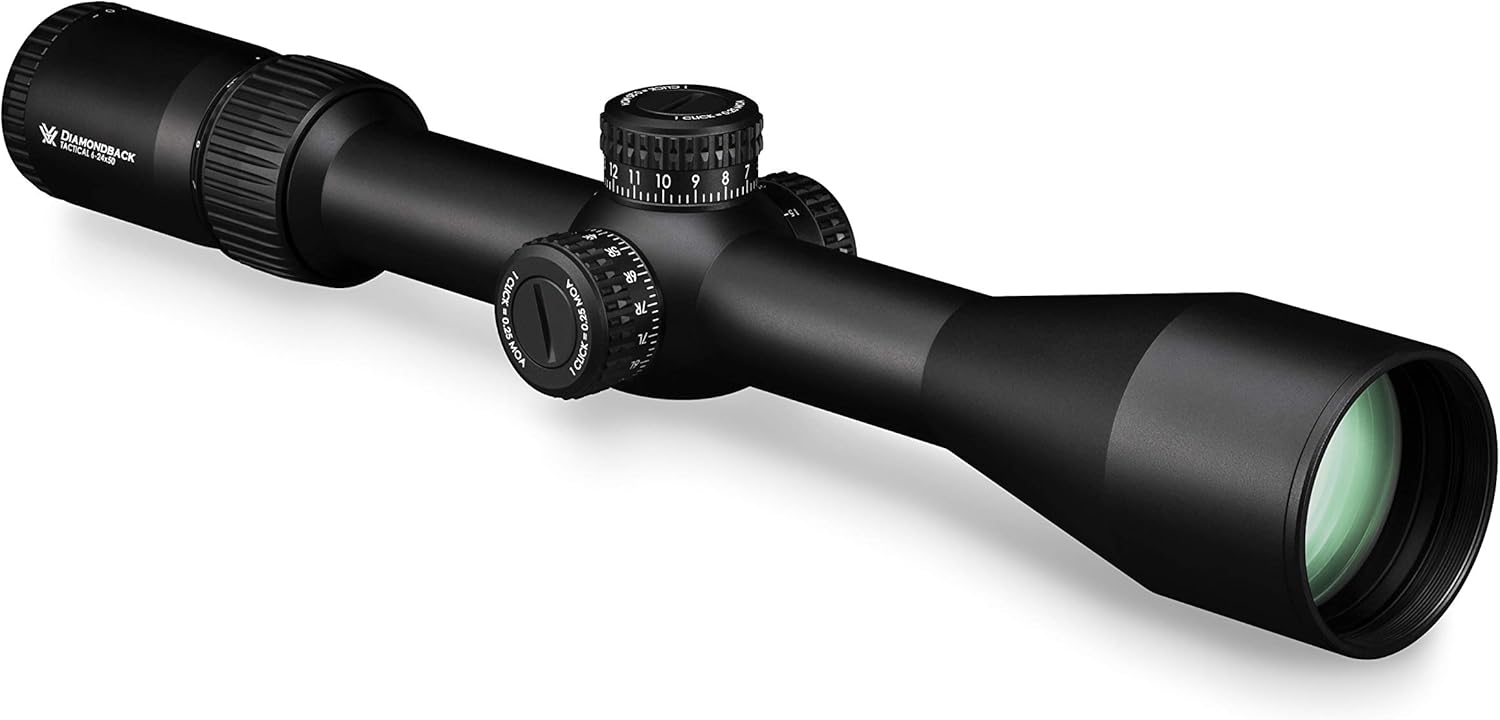
The Vortex Diamondback Tactical FFP is often cited as the gold standard for shooters entering the world of First Focal Plane optics. It strips away "fluff" like illumination to focus entirely on glass quality and turret reliability. For under $450, it offers a level of precision that was unheard of a decade ago, making it a staple for PRS rimfire and entry-level centerfire shooters alike.
Product Specs
- Magnification: 4-16x
- Objective Lens: 44mm
- Tube Size: 30mm
- Focal Plane: First Focal Plane (FFP)
- Adjustment: 1/4 MOA or 0.1 MRAD
- Weight: 23.1 oz
Pros and Cons
- Pros: Incredible FFP value; crisp, exposed turrets; legendary lifetime warranty.
- Cons: No reticle illumination; eye box gets tight at 16x.
Glass Clarity & ReticleThe Extra-low Dispersion (ED) glass provides a surprisingly sharp image with minimal color fringing at the edges. I found the EBR-2C reticle to be extremely functional for holdovers, as the FFP design ensures the subtensions remain accurate across the entire zoom range. Even in overcast conditions, the resolution remained high enough to distinguish 6mm holes at 100 yards.
Eye Relief & Eye BoxWith an eye relief of about 3.8 inches, it provides plenty of safety for centerfire rifles. The eye box is generous at 4x, allowing for quick target acquisition. However, like many optics in this price bracket, you do need a very consistent cheek weld when dialed up to 16x to avoid "shadowing" in the image.
DurabilityConstructed from a single piece of aircraft-grade aluminum, this scope is O-ring sealed and nitrogen-purged. I’ve used this in light rain and dusty range environments without any internal fogging or debris ingress. The hard-anodized finish is also quite resistant to the typical scratches one gets from barricade work.
Elevation & Windage KnobsThe turrets are the highlight here. They are exposed, tactile, and surprisingly "clicky" for the price. There is no mushiness between adjustments. While it lacks a sophisticated zero-stop, the markings are clear and easy to read, ensuring you can return to your 100-yard zero after dialing for distance.
Magnification & ParallaxThe 4-16x range is the "sweet spot" for most target shooters. The side parallax adjustment is smooth and allows you to dial out blur from 20 yards to infinity. This makes it an excellent choice for those who switch between high-power air rifles and long-range bolt guns.
Mounting & AccessoriesIt features a standard 30mm tube, so finding high-quality rings is easy. It comes with removable lens covers and a sunshade, which is a nice touch for shooting during the "golden hour." I mounted mine using Vortex Pro Series rings on a 20 MOA rail for maximum elevation travel.
My Personal ExperienceI mounted the Diamondback Tactical on my Tikka T3x CTR chambered in .308 Win using 168 gr Federal Gold Medal Match. During my testing, I performed a standard "Box Test," and the tracking was flawless—the hits returned exactly to the point of aim after 10 MOA adjustments in every direction. At 500 yards, the FFP reticle made windage holds intuitive. For the Best Scope For Under $450, this is the one I recommend most to students.
Online Customer CommentsReddit users in r/longrange frequently praise this scope for its tracking. One user noted, "It’s the best entry-level FFP scope out there; I’ve used it on my .22 trainer for two years and it never loses zero." Some forum members mention that the lack of illumination is a drawback for hunting, but for target shooting, it’s rarely an issue.
VerdictAn unbeatable entry-level FFP optic for those who value mechanical precision over lighting features.
➡️➡️➡️ Explore User Feedback and Current Pricing on Amazon
Athlon Optics Argos BTR GEN2 6-24X50 FFP
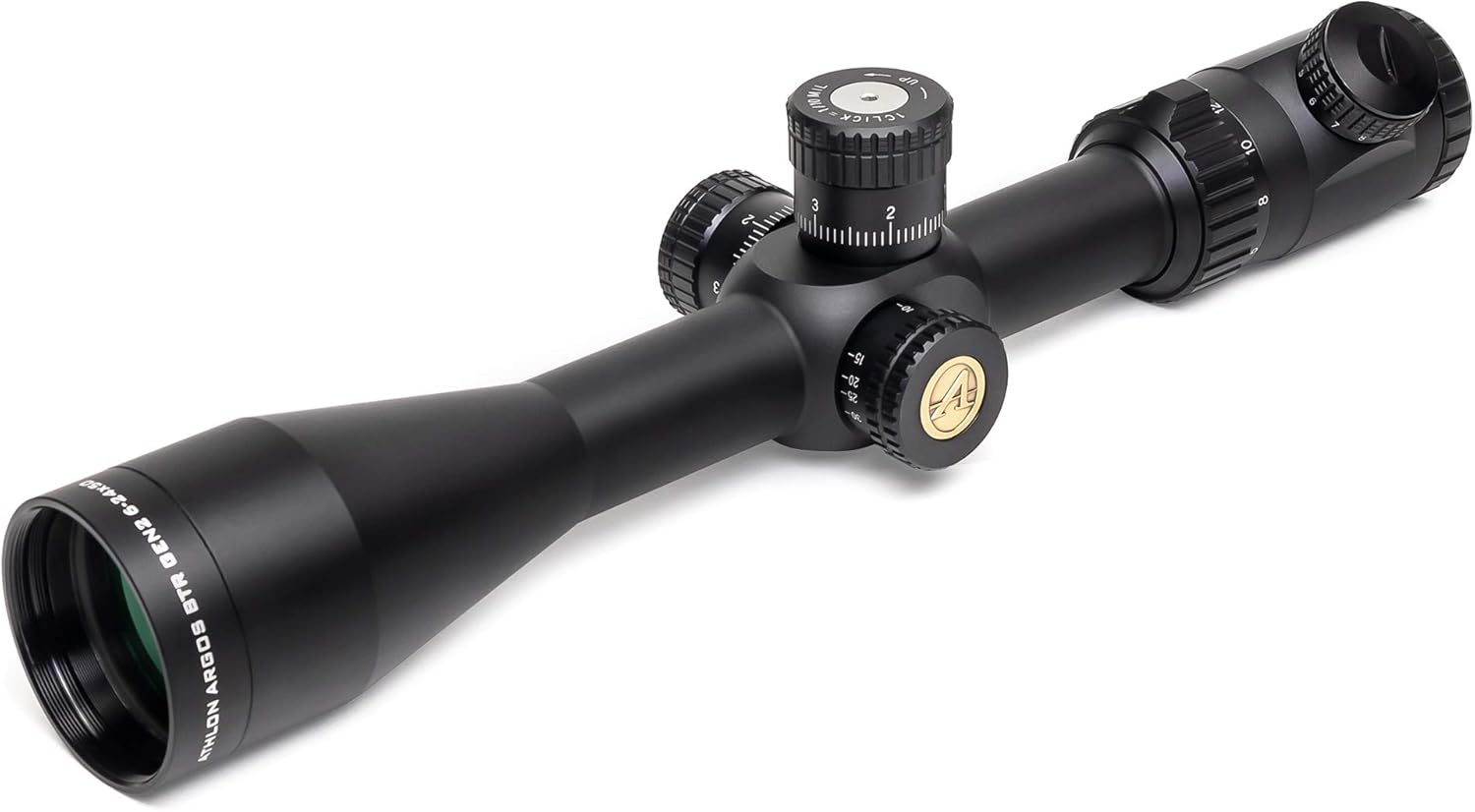
The Athlon Argos BTR GEN2 is a direct competitor to the Vortex Diamondback but offers higher magnification and an illuminated reticle. It is designed specifically for benchrest and long-range precision shooters who need to see small targets at extreme distances. The GEN2 improvements fixed many of the "mushy turret" complaints associated with the original model.
Product Specs
- Magnification: 6-24x
- Objective Lens: 50mm
- Tube Size: 30mm
- Focal Plane: First Focal Plane (FFP)
- Reticle: Illuminated APMR MIL
- Weight: 30.3 oz
Pros and Cons
- Pros: High 24x magnification; illuminated reticle; true zero stop.
- Cons: Heavy weight; glass clarity drops off slightly above 20x.
Glass Clarity & ReticleThe multi-coated lenses provide decent light transmission. The APMR reticle is a "Christmas tree" style, which I find perfect for busy target environments where you don't have time to dial. The illumination is daylight visible on the highest settings, which helps the reticle "pop" against dark targets in the shade.
Eye Relief & Eye BoxEye relief is around 3.3 inches. Because of the high 24x magnification, the exit pupil becomes quite small at the top end. You will need a consistent head position on your stock. It isn't as forgiving as a lower-power scope, but for stationary bench shooting, it is perfectly manageable.
DurabilityThe Argos BTR GEN2 features a 6061-T6 aluminum tube. It feels robust and "chunky." Athlon has improved the internals in the GEN2 to be more shockproof, easily handling the recoil of my 6.5 Creedmoor. It is also waterproof and fog-proof for all-weather reliability.
Elevation & Windage KnobsUnlike the Vortex, this includes a Precision Zero Stop system. This is a game-changer for target shooting, allowing you to slam the turret back down to zero without looking. The clicks are much more distinct than the GEN1, providing clear audible and tactile feedback.
Magnification & ParallaxWith a 6-24x range, this scope is built for the long haul. The side parallax adjusts down to 10 yards, which is phenomenal for dry-fire practice at home or for competitive rimfire shooters who need to engage targets at very close ranges.
Mounting & AccessoriesThe 50mm objective lens means you will likely need "medium" or "high" height rings to clear the barrel on most bolt-action rifles. It includes a lens cloth and basic covers. The 30mm tube provides 18 MILs of total elevation travel, which is sufficient for reaching 1,000 yards with most modern cartridges.
My Personal ExperienceI tested this on a Ruger Precision Rifle using 140 gr ELD-M ammunition. The Zero Stop was easy to set up with just a hex key. I spent a full afternoon hitting steel at 800 yards, and the 24x magnification was a huge help in spotting my own vapor trails and splashes. For a budget-friendly long-range rig, this represents incredible value.
Online Customer CommentsReviewers on SnipersHide often discuss the Argos as the "best bang for your buck" in FFP. One user commented, "The GEN2 turrets are 100% better than the originals. It’s the best way to get into FFP with illumination without spending $800."
VerdictThe best choice for shooters who need high magnification and a zero stop on a strict budget.
➡️➡️➡️ Explore User Feedback and Current Pricing on Amazon
Arken Optics SH4 GEN2 4-16X50 FFP
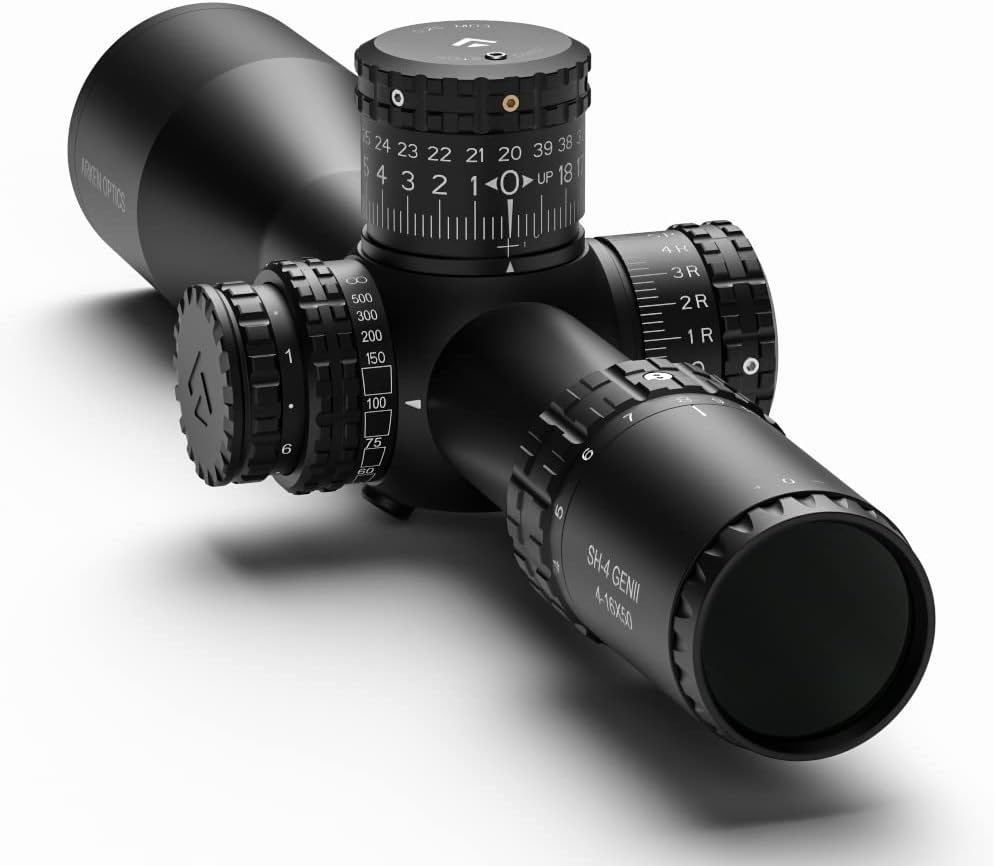
Arken Optics took the shooting world by storm by offering features usually reserved for $1,000 scopes at a fraction of the price. The SH4 GEN2 is built like a tank, featuring a 34mm tube that provides massive elevation travel. It is a heavy, overbuilt optic designed for the shooter who cares about mechanical perfection above all else.
Product Specs
- Magnification: 4-16x
- Objective Lens: 50mm
- Tube Size: 34mm
- Focal Plane: First Focal Plane (FFP)
- Reticle: VPR Illuminated
- Weight: 35.6 oz
Pros and Cons
- Pros: Massive 34mm tube; best-in-class turret feel; integrated zero stop.
- Cons: Very heavy; requires 34mm rings (less common).
Glass Clarity & ReticleThe glass is HD quality and holds up well against more expensive brands. I noticed very little chromatic aberration even in high-contrast "white target on green grass" scenarios. The VPR reticle is clean, with fine hash marks that don't cover up small "V-bull" targets at 300 yards.
Eye Relief & Eye BoxAt 3.6 inches, the eye relief is standard. The 34mm tube allows for a slightly more forgiving eye box than some 30mm competitors, though the scope's weight means you'll want to ensure your mounting system is rock solid to prevent any shifting under recoil.
DurabilityThis is perhaps the most "durable-feeling" scope in the list. It is heavy for a reason—the housing is thick and the turrets are massive. It feels like it could survive a fall off a bench without losing zero. It’s nitrogen-purged and rated for heavy recoiling magnums.
Elevation & Windage KnobsArken’s "AZS" (Arken Zero Stop) is widely considered the best in the sub-$500 category. The turrets are huge and provide the most tactile, "clunk" sound of any scope I've tested under $450. Tracking is 99.9% accurate, making it a favorite for those who dial every shot.
Magnification & ParallaxThe 4-16x range is versatile, and the side parallax is crisp. One unique feature is the "turret tracking" guarantee that Arken provides, which gives target shooters extra peace of mind when pushing the limits of their caliber.
Mounting & AccessoriesNote that you must buy 34mm rings for this scope. Arken often sells a "combo pack" with rings and a throw lever, which I highly recommend. The larger tube allows for a whopping 36 MILs of elevation travel, which is insane for a 4-16x scope.
My Personal ExperienceI used the SH4 GEN2 on a heavy barrel 22-250 Remington for long-range varmint and target work. The weight actually helped balance the rifle on a front rest. Dialing for 400-yard targets felt more like using a Nightforce than a budget optic. If you don't mind the weight, this is technically the "best" mechanical scope on this list.
Online Customer CommentsReddit's r/aimdownsights has many photos of the SH4. Users love the "overbuilt" nature. One common sentiment is, "It’s heavy as a brick, but the turrets are better than my Vortex Viper which costs twice as much."
VerdictThe ultimate mechanical tool for target shooting where weight isn't a concern but tracking is everything.
➡️➡️➡️ Explore User Feedback and Current Pricing on Amazon
Burris Fullfield IV 3-12x42
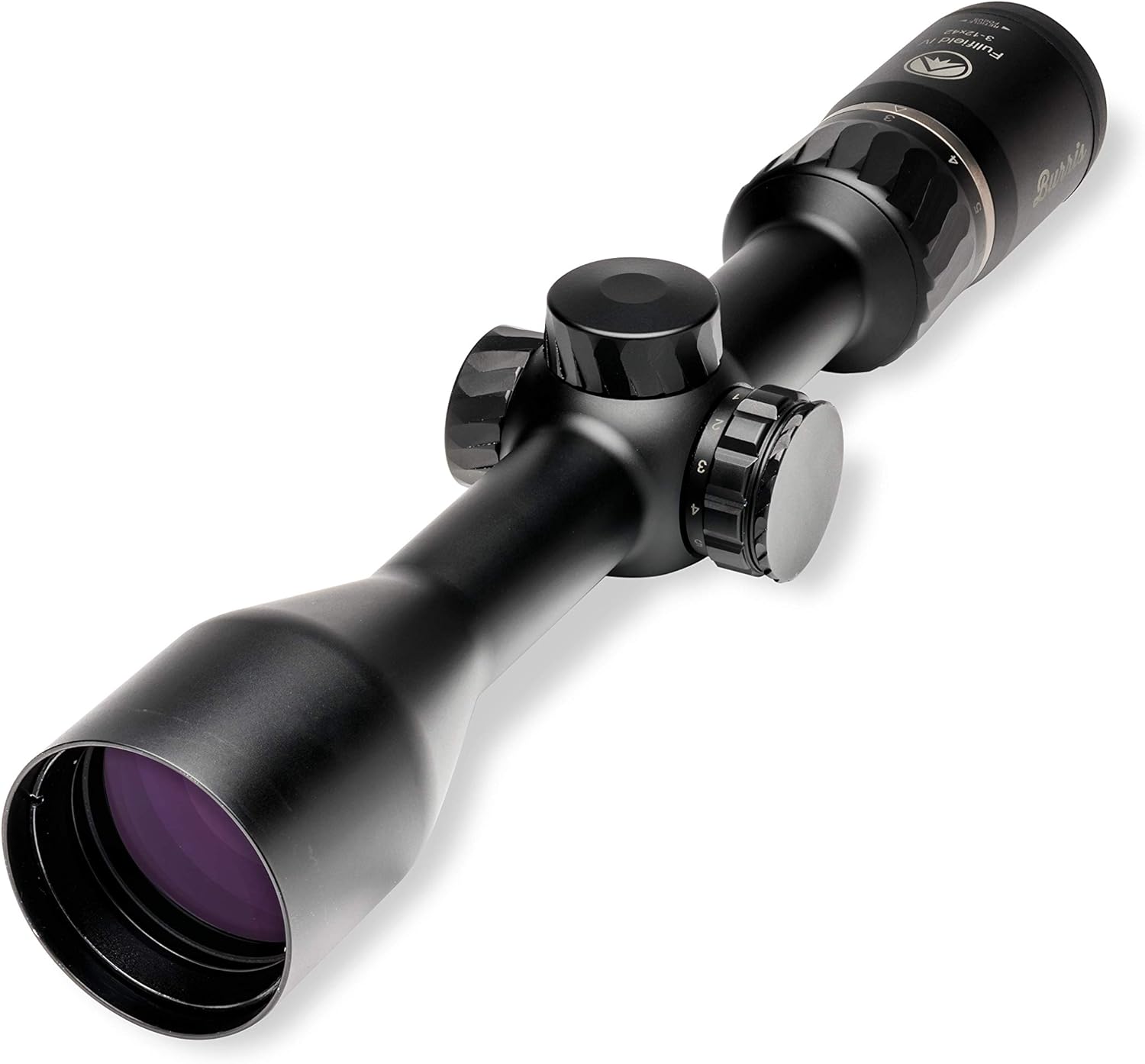
The Burris Fullfield IV is the latest evolution of a line that has been a favorite for decades. While many target scopes focus on "tactical" features, the Fullfield IV prioritizes sleek design and glass clarity. It is the Best Scope For Under $450 for the shooter who wants a lightweight rig that can transition from the bench to the field.
Product Specs
- Magnification: 3-12x
- Objective Lens: 42mm
- Tube Size: 1-inch
- Focal Plane: Second Focal Plane (SFP)
- Reticle: Ballistic E3
- Weight: 18.4 oz
Pros and Cons
- Pros: Very lightweight; classic styling; great low-light performance.
- Cons: SFP means holdovers are only accurate at 12x; capped turrets.
Glass Clarity & ReticleBurris glass has always punched above its weight. The image is bright and the colors are very natural. The Ballistic E3 reticle is a simple, effective design with drop compensation marks that are easy to see without being distracting. It’s perfect for target shooting at known distances.
Eye Relief & Eye BoxThe eye relief is 3.5 to 3.8 inches. Because it’s an SFP scope with a more modest 12x top end, the eye box is very generous. You don't have to be perfectly "on" the scope to get a full image, which makes it great for beginners or shooters who move between different positions.
DurabilityDespite its light weight, the Fullfield IV is "Burris Tough." It is shockproof and has been tested to withstand heavy recoil. The 1-inch tube is nitrogen-filled to prevent internal fogging, and the exterior finish is a durable matte black that resists glare.
Elevation & Windage KnobsThe turrets on this model are capped to prevent accidental movement. While you can dial them, they are designed more for a "set it and forget it" approach using the reticle for holdovers. The clicks are precise, though not as loud as the tactical options listed above.
Magnification & ParallaxThe 3-12x magnification range is traditional and highly effective for shooting up to 500 yards. This model features a fixed parallax (usually 100 yards), which simplifies the shooting process but means you need to maintain good form to avoid parallax error at longer ranges.
Mounting & AccessoriesThe 1-inch tube means it will fit into almost any standard set of rings you already own. It’s a low-profile scope, so it can be mounted very close to the bore, which is ideal for maintaining a good cheek weld on rifles with traditional stocks.
My Personal ExperienceI mounted this on a CZ 457 rimfire rifle. At 100 yards, I was able to shoot sub-MOA groups with ease. The simplicity of the SFP reticle is refreshing if you aren't doing complex MIL-grid calculations. It’s a "shooter's scope" that just works without requiring a degree in ballistics to operate.
Online Customer CommentsReviewers on hunting forums often praise the Fullfield series for reliability. One user noted, "I’ve had a Fullfield on my .30-06 for 10 years and it’s never moved. The IV is even clearer." Target shooters appreciate it for its light weight on "walking" varmint rifles.
VerdictA high-quality, simple, and lightweight optic for those who prefer traditional SFP reticles and sleek designs.
➡️➡️➡️ Explore User Feedback and Current Pricing on Amazon
Vortex Optics Strike Eagle 1-8x24 SFP
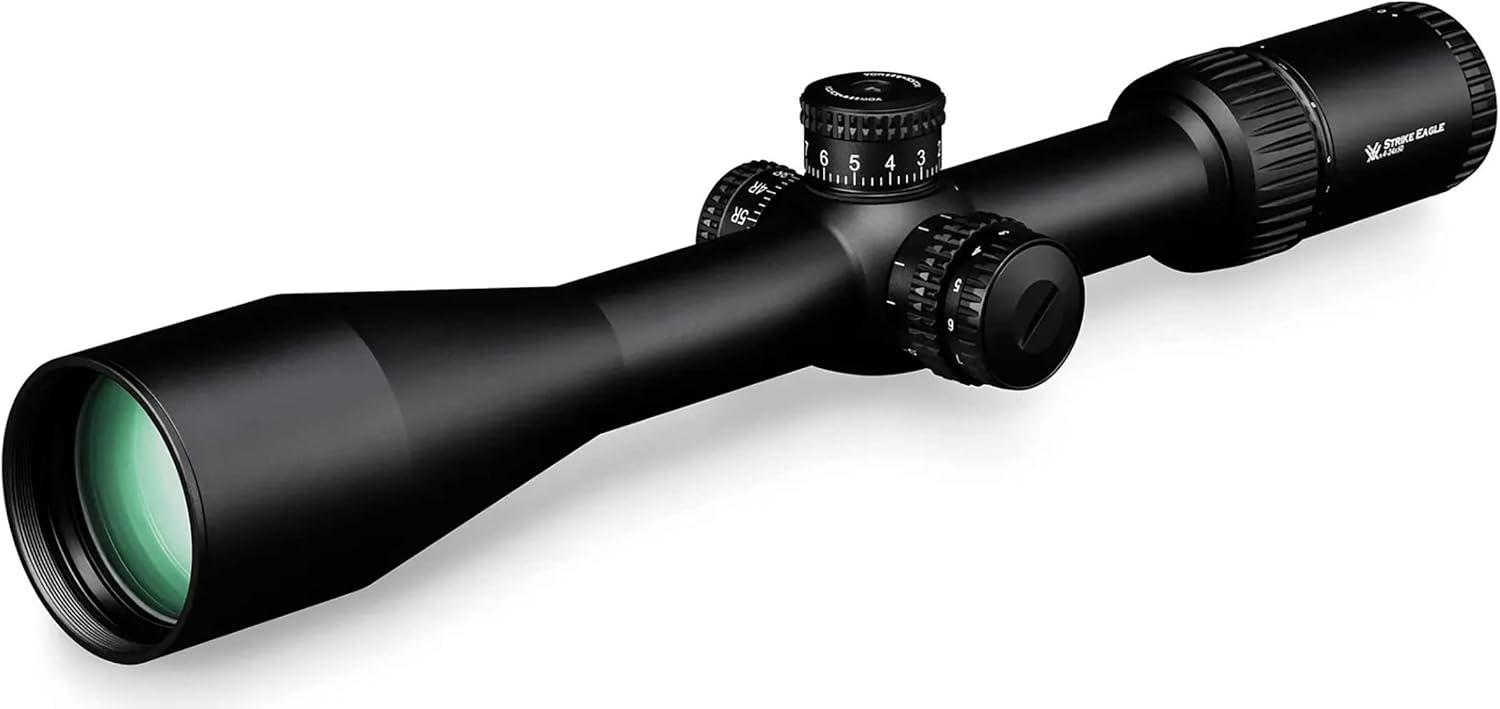
Target shooting isn't always about slow, deliberate fire from a bench. For 3-Gun competitors or "tactical" target shooters, the Low Power Variable Optic (LPVO) is king. The Strike Eagle 1-8x24 offers true 1x magnification for close-up targets and 8x for stretching out to 600 yards, all within a budget-friendly package.
Product Specs
- Magnification: 1-8x
- Objective Lens: 24mm
- Tube Size: 30mm
- Focal Plane: Second Focal Plane (SFP)
- Reticle: AR-BDC3 Illuminated
- Weight: 17.6 oz
Pros and Cons
- Pros: Fast target acquisition; illuminated "halo" reticle; included throw lever.
- Cons: 8x is a bit low for precision "tiny group" shooting; some edge distortion at 1x.
Glass Clarity & ReticleThe glass is clear and optimized for speed. The AR-BDC3 reticle features a central "broken circle" that acts like a red dot at 1x. At 8x, the BDC (Bullet Drop Compensation) marks allow for quick hits on man-sized steel targets out to 650 yards using standard 5.56 NATO loads.
Eye Relief & Eye BoxAs an LPVO, the eye relief is around 3.5 inches. The eye box at 1x is massive—you can shoot with both eyes open, just like a red dot. At 8x, it tightens up significantly, but the included thread-in throw lever makes it easy to quickly find the right magnification for your distance.
DurabilityThis scope is built to take the abuse of a competition stage. It is shockproof, waterproof, and the lenses are Armortek coated to resist scratches and oil. I’ve seen these banged against barriers in 3-Gun matches and keep on ticking.
Elevation & Windage KnobsThe turrets are low-profile and capped. This is appropriate for an LPVO where you usually "zero and hold." The adjustments are 1/2 MOA per click, which is less precise than a benchrest scope but perfectly fine for the intended tactical target use.
Magnification & ParallaxThe 1-8x range is incredibly versatile for the AR-15 platform. The parallax is fixed at 100 yards. While this isn't a "precision" target scope for shooting 1/4 inch groups, it is the best tool for "combat-effective" target shooting at varying distances.
Mounting & AccessoriesIt requires 30mm rings or, more commonly, a one-piece "cantilever" mount for AR-style rifles. A big plus is the included throw lever and flip-caps, which usually cost an extra $50-$70 from other brands.
My Personal ExperienceI ran this on an 18-inch SPR (Special Purpose Rifle) build. Engaging steel plates from 50 to 500 yards was incredibly fast. The illumination is bright enough for midday use, and the BDC marks were "close enough" for consistent hits on 12-inch plates. If your target shooting involves movement, this is the winner.
Online Customer CommentsArfcom (AR15.com) users generally view the Strike Eagle as the benchmark for entry-level LPVOs. "It’s not a Razor Gen II, but for 1/4 the price, it gets 90% of the job done," says one frequent poster.
VerdictThe best "speed" scope for under $450, perfect for AR-15 owners and dynamic target shooters.
➡️➡️➡️ Explore User Feedback and Current Pricing on Amazon
Sightmark Citadel 3-18x50 FFP
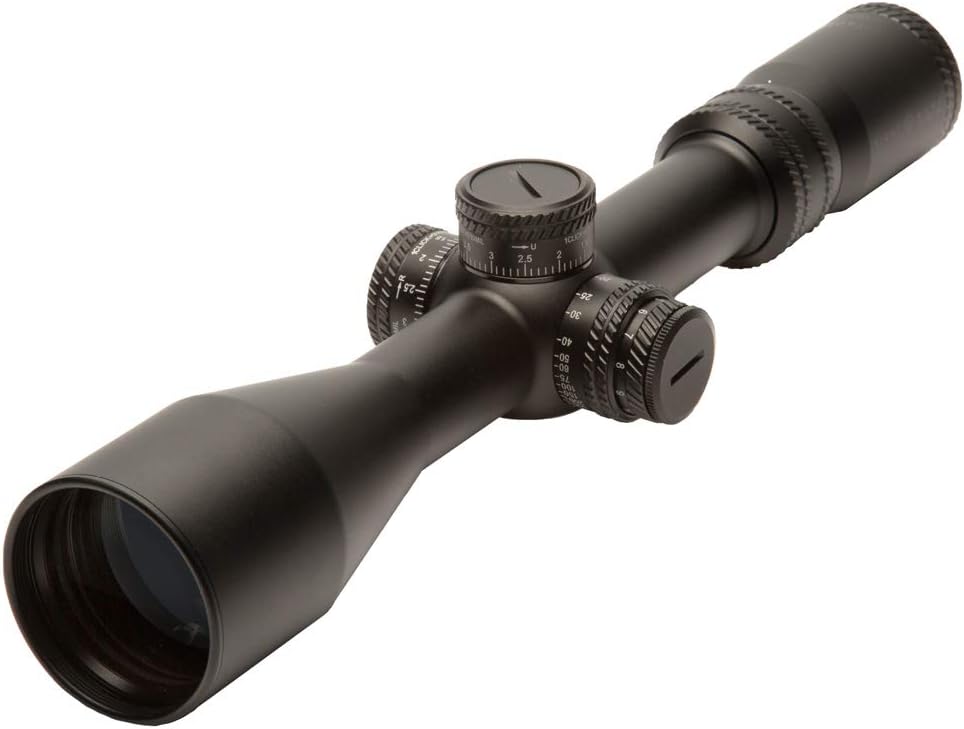
The Sightmark Citadel occupies a unique space, offering a 6x zoom ratio (3-18x) which provides a bit more flexibility than the standard 4-16x models. It’s an FFP scope with a fine etched reticle that is designed for those who want a "jack of all trades" optic for long-range target practice.
Product Specs
- Magnification: 3-18x
- Objective Lens: 50mm
- Tube Size: 30mm
- Focal Plane: First Focal Plane (FFP)
- Reticle: LR2 Illuminated
- Weight: 27.3 oz
Pros and Cons
- Pros: Wide 6x zoom range; exposed locking turrets; sunshade included.
- Cons: Tracking can be slightly less "sharp" than Arken; illumination is a bit dim.
Glass Clarity & ReticleThe glass is decent, with good contrast. The LR2 reticle is a MIL-based FFP design, which is excellent for target shooters who prefer the metric system for calculations. The illumination covers the center crosshair, aiding in low-light target identification.
Eye Relief & Eye BoxEye relief is 3.5 to 4.6 inches, which is quite generous. The eye box remains usable throughout the magnification range, although, like the others, it requires more care at 18x. The 50mm objective lens does a good job of pulling in light at the higher magnification settings.
DurabilityThe Citadel is IP67 rated, meaning it’s waterproof and dustproof. It’s built on a 30mm single-piece tube. While it feels less "rugged" than the Arken SH4, it is more than capable of handling typical range use and occasional field trips.
Elevation & Windage KnobsThe turrets are exposed and feature a pull-to-turn locking mechanism. This is a great safety feature to prevent your zero from bumping during transport. The clicks are audible, though I found them a little softer than the Vortex or Arken offerings.
Magnification & ParallaxThe 3-18x range is its biggest selling point. 3x is low enough for close-in work, while 18x gives you that extra bit of reach over a 16x scope. The side parallax is smooth and focuses down to 15 yards.
Mounting & AccessoriesIt comes with a sunshade and flip-up lens covers. The 30mm tube makes it compatible with a wide range of mounting solutions. Because of the 50mm objective, I suggest using medium-height rings to ensure there is enough clearance from the rifle's barrel.
My Personal ExperienceI used the Citadel on a .223 Rem bolt gun for shooting "egg shoots" (hitting eggs at 200 yards). The 18x magnification was perfect for the small targets. The locking turrets were a nice peace of mind when moving between the bench and the rack. It’s a solid performer that doesn't get enough credit.
Online Customer CommentsForum users on OpticsTalk mention that the Citadel is a "sleeper" pick. One user wrote, "The locking turrets are the best part. I’ve used mine for two seasons of local matches and it’s held up perfectly."
VerdictA versatile, feature-rich FFP scope with a great zoom range for those who want a bit more "reach."
➡️➡️➡️ Explore User Feedback and Current Pricing on Amazon
How to Choose the Right Scope for This Budget
Choosing the Best Scope For Under $450 requires a clear understanding of your specific shooting goals. At this price point, manufacturers have to make trade-offs. You generally cannot have world-class glass, perfect mechanical tracking, and lightweight construction all in one package. You must prioritize one or two of these elements.
First, consider the Focal Plane. For target shooting at varying distances, a First Focal Plane (FFP) scope is usually superior. Since the reticle grows and shrinks with the magnification, your holdover marks remain accurate at any zoom level. However, if you only ever shoot at one specific distance or prefer a simple, unchanging reticle, a Second Focal Plane (SFP) scope often offers slightly better glass clarity for the same price because the internal construction is simpler.
Second, look at the Turrets. If you plan on "dialing" for your shots (manually turning the knobs for every distance), you need exposed, tactical turrets with excellent tracking. Scopes like the Arken SH4 or Vortex Diamondback Tactical are built for this. If you prefer to "hold over" using the reticle, capped turrets are fine and often more durable for transport.
Third, evaluate Magnification. For target shooting up to 300 yards, a 10x or 12x top end is plenty. If you are pushing to 600 or 1,000 yards, you will appreciate 16x to 24x. However, be aware that cheaper scopes often have "darker" or "fuzzier" images at their maximum magnification. Sometimes a high-quality 16x image is better than a low-quality 24x image.
Finally, don't forget the Parallax Adjustment. A side parallax knob is essential for precision target work. It allows you to ensure the reticle and the target are on the same optical plane, which eliminates the shifting of the reticle when you move your head. For a target scope under $450, never settle for a fixed-parallax model unless you are shooting very low-recoil rifles at fixed distances.
FAQs
1. Is a $450 scope good enough for 1,000-yard shooting?Yes, several of the FFP models on this list, such as the Athlon Argos and Arken SH4, are specifically designed with enough elevation travel and reticle detail to reach 1,000 yards. While they won't be as bright as a $2,000 scope, they are mechanically capable of the task.
2. What is the difference between MOA and MRAD?These are simply two different units of measurement. MOA (Minute of Angle) is roughly 1 inch at 100 yards, while MRAD (Milliradian) is roughly 3.6 inches at 100 yards. For target shooting, choose the one your friends or spotter use, but ensure your turrets match your reticle (e.g., MIL/MIL or MOA/MOA).
3. Should I buy a 30mm or 34mm tube?A 34mm tube generally allows for more internal elevation travel, which is helpful for extreme long range. However, 34mm rings are more expensive and less common. For most shooters, a 30mm tube is more than sufficient.
4. Does an illuminated reticle help in target shooting?It is most helpful when shooting at dark targets in low light or shadows. For standard daytime paper punching, illumination is a "nice to have" but not a necessity.
5. Why are FFP scopes usually more expensive?The manufacturing process for FFP is more complex because the reticle must be etched perfectly so that it scales accurately with the zoom. However, the gap is closing, and many of the Best Scope For Under $450 options are now FFP.
Conclusion
Navigating the world of budget optics doesn't have to be a compromise on quality. Whether you choose the mechanical precision of the Arken SH4, the versatility of the Vortex Diamondback Tactical, or the speed of the Strike Eagle, you are getting a tool that would have cost double the price just a few years ago. The Best Scope For Under $450 is ultimately the one that matches your rifle's purpose and your personal shooting style. Invest in good rings, learn your subtensions, and you’ll find that these "budget" scopes are capable of incredible feats on the range. Happy shooting!