Finding the best scope for under $1000 is a journey into the "sweet spot" of the optics world, where you stop paying for basic survival features and start investing in genuine mechanical precision and glass clarity. In my years of testing glass, I have found that this specific price bracket is where the law of diminishing returns begins to kick in; you get 90% of the performance of a $3000 optic at a fraction of the cost. Whether you are ringing steel at 800 yards or punching tight groups on paper at 100, the best scope for under $1000 must offer repeatable tracking, a usable reticle, and enough light transmission to see your impacts in varying conditions. In this review, I’ve hand-selected six optics that define this category, focusing heavily on their performance for target shooting and long-range precision.
Top Product List: Best Scope For Under $1000
- Vortex Optics Viper PST Gen II 5-25x50 FFP – Best Overall for Long-Range Target Shooting
- Athlon Optics Helos BTR GEN2 4-20x50 – Best Value Feature Set
- Arken Optics EP5 5-25X56 FFP – Best Mechanical Tracking in Class
- Leupold Mark 3HD 1.5-4x20 – Best Lightweight Tactical Option
- Sightmark Citadel 3-18x50 FFP – Best Budget-Friendly First Focal Plane
- Vortex Optics Strike Eagle 5-25x56 FFP – Best Massive Objective Lens for Low Light
Vortex Optics Viper PST Gen II 5-25x50 FFP
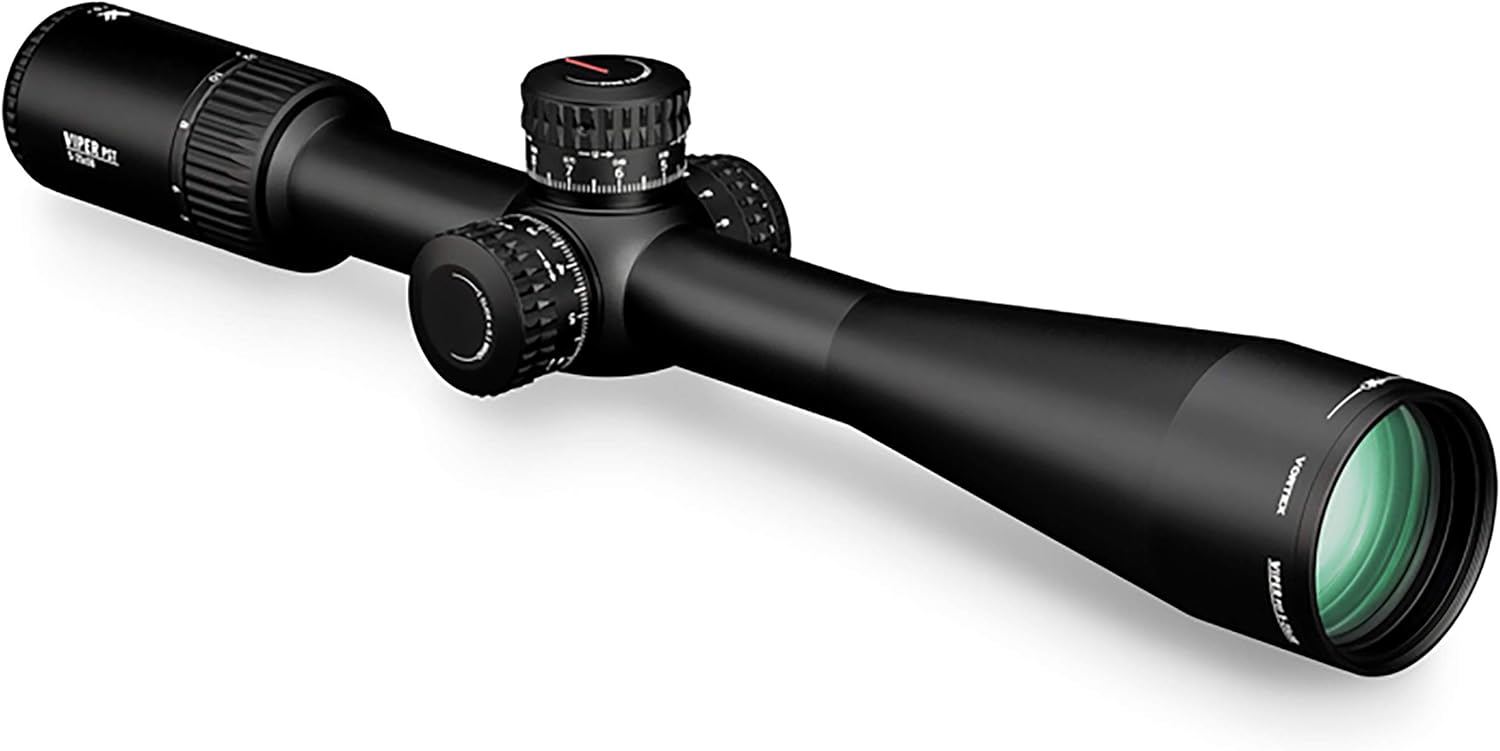
The Vortex Viper PST Gen II has long been considered the benchmark for anyone searching for the best scope for under $1000. It bridges the gap between hobbyist glass and professional-grade optics, offering a First Focal Plane (FFP) configuration that is essential for holdovers at any magnification. Built on a 30mm aircraft-grade aluminum tube, this scope is designed to withstand the recoil of heavy magnum calibers while maintaining a refined aesthetic. The illuminated reticle and tactical turrets make it a favorite for PRS (Precision Rifle Series) beginners and seasoned target shooters alike.
Product Specs
- Magnification: 5-25x
- Objective Lens Diameter: 50mm
- Reticle: EBR-7C (MRAD or MOA)
- Tube Size: 30mm
- Focal Plane: First Focal Plane (FFP)
- Weight: 31.2 oz
Pros and Cons
- Pros: Incredible tracking reliability; crystal clear XD glass; intuitive EBR-7C Christmas tree reticle.
- Cons: Slightly heavier than some competitors; illumination dial can be stiff.
Glass Clarity & ReticleThe XD (Extra-low Dispersion) glass provides impressive resolution and color fidelity. When looking through the EBR-7C reticle, the etchings are crisp, and the "Christmas tree" style allows for very precise windage and elevation holdovers without touching the dials.
Eye Relief & Eye BoxAt 3.4 inches, the eye relief is generous enough for high-recoil rifles. The eye box is remarkably forgiving at 5x, though, as expected, it tightens up at 25x, requiring a consistent cheek weld to avoid "shadowing" at the edges.
DurabilityVortex is known for its rugged builds, and the PST Gen II is no exception. It is O-ring sealed and argon purged, ensuring it remains fog-proof and waterproof even in the most depressing rain-soaked range days.
Elevation & Windage KnobsThe turrets provide a distinct, tactile "click" that you can feel through gloves. The RZR Zero Stop is one of the best in the business, ensuring you can always return to your 100-yard zero after dialing for long distance.
Magnification & ParallaxThe 5-25x range is the "Goldilocks" zone for target shooting. The side parallax adjustment is smooth and allows you to dial out blur from 25 yards to infinity, which is vital for high-magnification precision.
Mounting & AccessoriesIt fits standard 30mm rings. Inside the box, you’ll find a sunshade, which I highly recommend using to prevent glare on bright afternoons, and a lens cloth that actually works.
My Personal ExperienceI mounted this on my Tikka T3x CTR in .308 Win using Seekins Precision rings. During a "Box Test," where I dialed 10 MRAD up, 10 right, 10 down, and 10 left, the scope returned exactly to the original zero point. The glass remained clear enough to see bullet holes at 200 yards even as the sun began to set. It feels like a much more expensive piece of kit than the price tag suggests.
Online Customer CommentsReddit users in r/longrange frequently praise the PST Gen II as the "gateway drug" to precision shooting. Many users note that while the glass isn't "Razor" quality, it is indistinguishable from higher-end optics until you get past 600 yards.
VerdictIf you want a scope that does everything well without a single major flaw, this is it. It remains the king of the sub-$1000 category.
➡️➡️➡️ Explore User Feedback and Current Pricing on Amazon
Athlon Optics Helos BTR GEN2 4-20x50
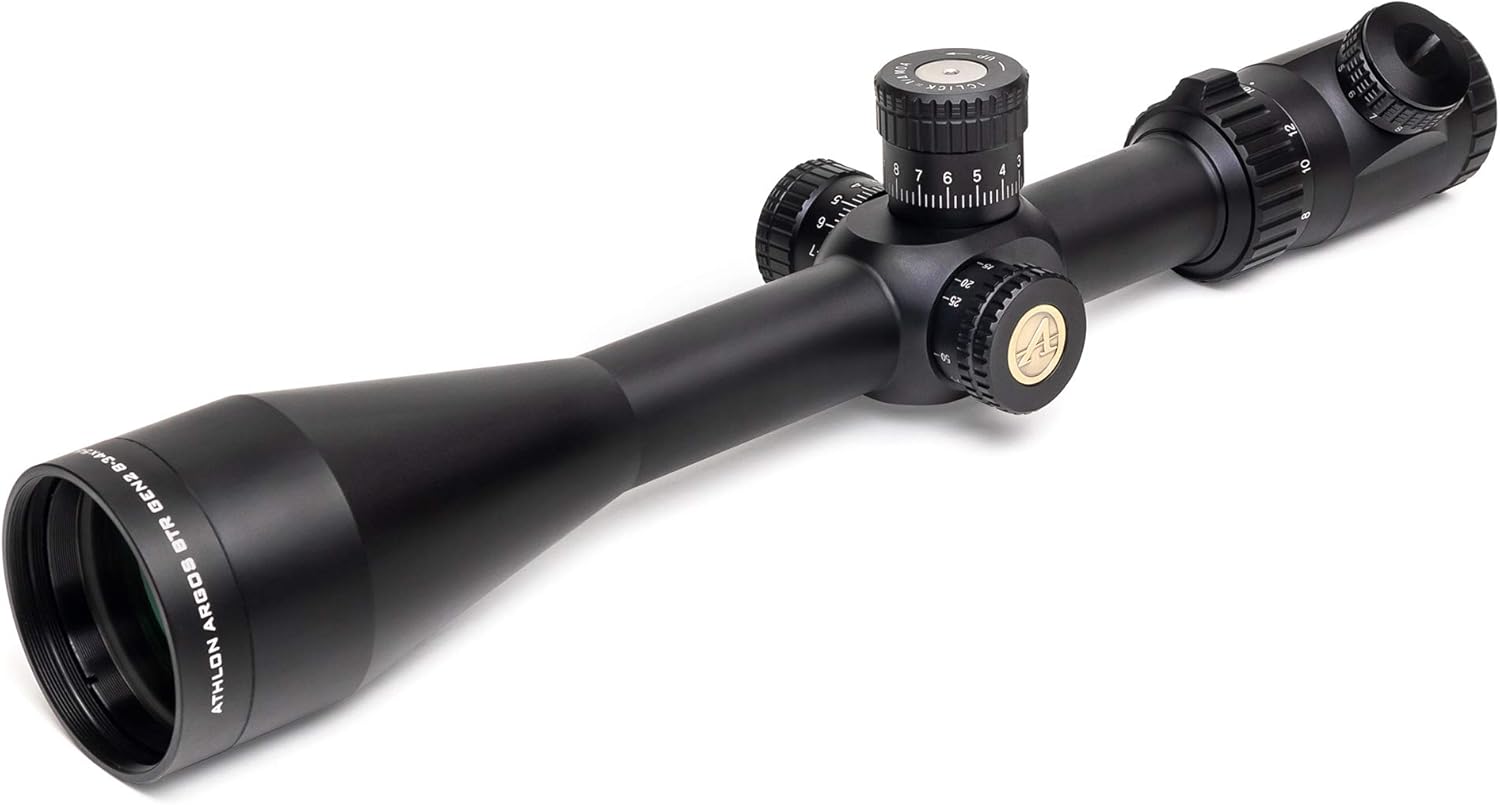
Athlon has disrupted the market by offering high-end features at prices that seem almost too good to be true. The Helos BTR GEN2 is a powerhouse for target shooters who want locking turrets and FFP versatility. This optic is built for the shooter who moves between different shooting positions and needs an optic that won't accidentally dial when bumped. Its 4-20x range is versatile enough for both mid-range hunting and long-distance steel slapping, making it a true hybrid contender.
Product Specs
- Magnification: 4-20x
- Objective Lens Diameter: 50mm
- Reticle: APLR6 FFP IR MOA/MIL
- Tube Size: 30mm
- Focal Plane: First Focal Plane (FFP)
- Weight: 27.2 oz
Pros and Cons
- Pros: Locking turrets prevent accidental adjustments; very compact for its power range; excellent price-to-performance ratio.
- Cons: Glass clarity drops slightly at maximum 20x magnification; reticle can be thin at 4x.
Glass Clarity & ReticleThe fully multi-coated lenses provide a bright image, though I noticed a slight "milkiness" at the very edges when pushed to 20x in low light. The APLR6 reticle is illuminated and offers a very clean center crosshair for precise aiming points.
Eye Relief & Eye BoxOffering 3.6 inches of eye relief, it is very comfortable for long sessions at the bench. The eye box stays relatively open throughout the magnification range, making it easier to maintain a full field of view during rapid fire.
DurabilityThe Helos is built like a tank. It’s waterproof and shockproof, and the matte finish is surprisingly resistant to scratches from barricades or tripod mounts. It feels dense and well-assembled in the hand.
Elevation & Windage KnobsThe standout feature here is the locking turrets. You have to pull them out to adjust and push them in to lock. The clicks are audible and positive, though slightly "mushier" than the Vortex PST Gen II.
Magnification & ParallaxThe 4-20x range is excellent for those who find 25x to be overkill. Parallax adjustment goes down to 10 yards, which makes this an incredible option for high-end precision rimfire (22LR) shooters as well.
Mounting & AccessoriesIt uses standard 30mm rings. Athlon includes basic lens caps, but you’ll likely want to upgrade to flip-ups for better field protection.
My Personal ExperienceI used this Helos on a Bergara B-14R (22LR) for a local NRL22 match. The ability to adjust parallax down to 10 yards was a lifesaver for close-range stages. The locking turrets gave me peace of mind while moving between awkward shooting positions. For the money, the mechanical reliability during dial-heavy stages was flawless.
Online Customer CommentsForum members on SnipersHide often point to the Helos GEN2 as the best alternative to more expensive "legacy" brands. Users love the zero-stop system, which they find easier to set than some competitors.
VerdictA feature-rich optic that punches way above its weight class, especially for shooters who appreciate a locking turret system.
➡️➡️➡️ Explore User Feedback and Current Pricing on Amazon
Arken Optics EP5 5-25X56 FFP
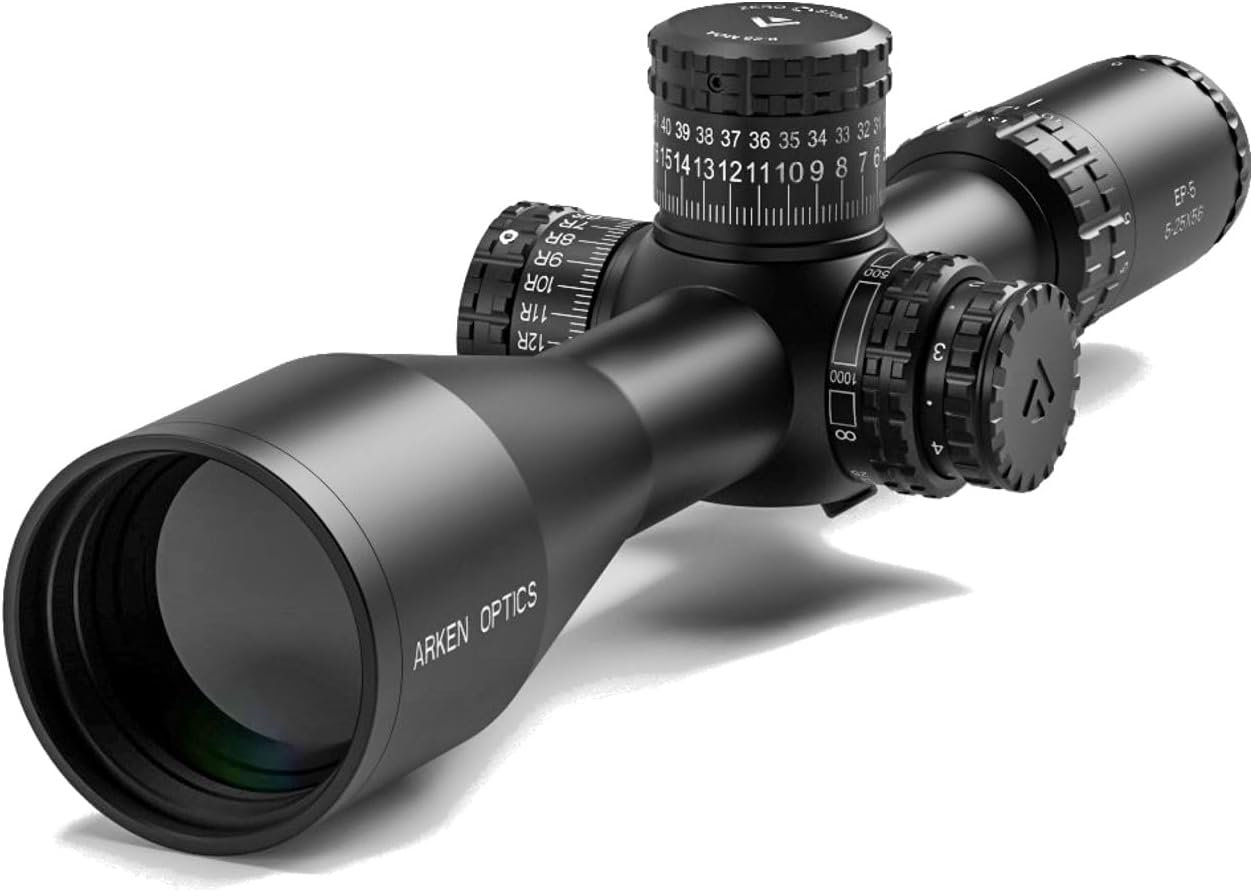
Arken Optics has taken the internet by storm, and for good reason. The EP5 is their flagship model that targets the $1000 bracket with a 34mm tube—a feature usually reserved for much more expensive glass. This larger tube allows for a massive amount of internal elevation travel, which is a dream for extreme long-range shooters. If your goal is to hit targets at 1000 yards and beyond on a budget, the EP5 is designed specifically for your needs.
Product Specs
- Magnification: 5-25x
- Objective Lens Diameter: 56mm
- Reticle: VPR FFP
- Tube Size: 34mm
- Focal Plane: First Focal Plane (FFP)
- Weight: 39.2 oz
Pros and Cons
- Pros: 34mm tube offers huge elevation range; exceptionally crisp turret clicks; Japanese glass.
- Cons: Extremely heavy; requires 34mm rings (less common than 30mm).
Glass Clarity & ReticleUsing Japanese Lanthanum glass, the EP5 offers clarity that rivals scopes twice its price. The VPR reticle is a "MIL-scale" design that is very fine, ensuring it doesn't obscure small targets even at 25x magnification.
Eye Relief & Eye BoxEye relief is 3.4 inches. Due to the 56mm objective and 34mm tube, the eye box is surprisingly large and easy to get behind, though the sheer size of the scope requires a proper adjustable cheek riser on your stock.
DurabilityThis scope is a "chonk." It is built incredibly tough, but that comes at the cost of weight. It’s fine for a bench or prone rifle, but you wouldn't want to carry this on a mountain hunt.
Elevation & Windage KnobsArken turrets are arguably the best in the sub-$1000 market. They are incredibly loud and tactile. Every click feels like a precision instrument, and the zero-stop is robust and simple to set.
Magnification & ParallaxThe 5-25x zoom is smooth, and the side parallax knob is well-calibrated. With the 56mm objective lens, it gathers a massive amount of light, making it a top performer during the "golden hour" at the range.
Mounting & AccessoriesNote that you must buy 34mm rings. Arken often sells a "combo pack" that includes rings, a throw lever, and a bubble level—items I highly recommend for precision shooting.
My Personal ExperienceI mounted the EP5 on a 6.5 Creedmoor build. The tracking was boringly reliable. I dialed up 12 MILs to hit a plate at 1100 yards and then dialed straight back to zero; the next shot at 100 yards was dead center. The illumination is daylight visible, which is rare at this price point. It’s a heavy beast, but on a target rifle, weight is your friend for recoil management.
Online Customer CommentsReviewers on YouTube and Reddit often debate if Arken is "too good to be true." Most actual owners report that the mechanical tracking is the highlight, often outperforming the "big name" brands in side-by-side tests.
VerdictThe best choice for a dedicated long-range bench rifle where weight isn't a concern but tracking and elevation travel are paramount.
➡️➡️➡️ Explore User Feedback and Current Pricing on Amazon
Leupold Mark 3HD 1.5-4x20
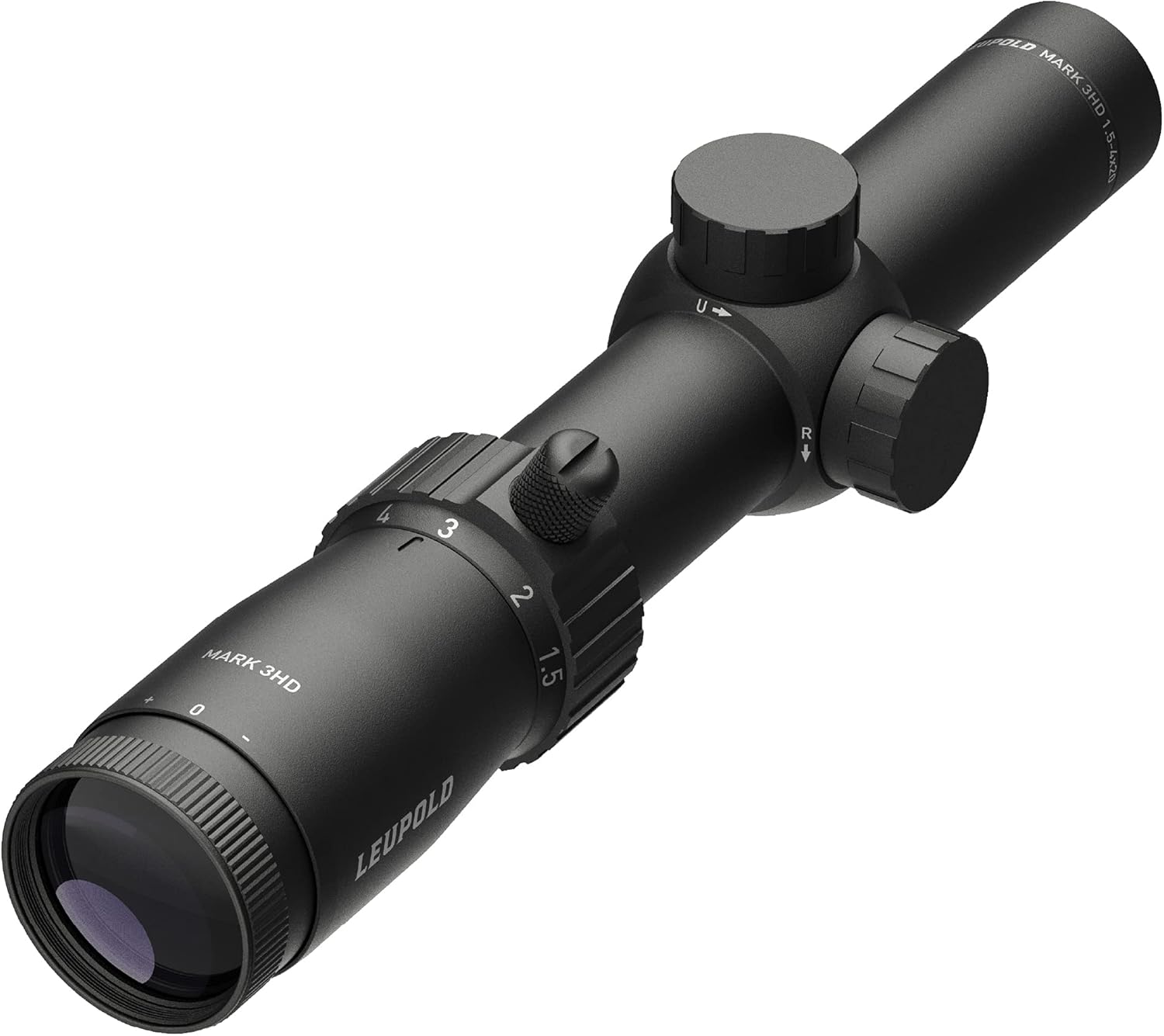
Not every target shooter is looking for 25x magnification. For those focusing on tactical "gas gun" matches or rapid-fire target drills with an AR-15, the Leupold Mark 3HD is a premium, lightweight solution. Leupold brings their legendary "Elite Optical System" to a compact 1.5-4x LPVO (Low Power Variable Optic). While it doesn't have the reach of a long-range scope, its speed and clarity at close-to-mid ranges are unmatched in this price tier.
Product Specs
- Magnification: 1.5-4x
- Objective Lens Diameter: 20mm
- Reticle: AR-Ballistic
- Tube Size: 30mm
- Focal Plane: Second Focal Plane (SFP)
- Weight: 9.6 oz
Pros and Cons
- Pros: Incredibly lightweight; best-in-class low-light performance for a small objective; gold-standard warranty.
- Cons: Limited magnification for long range; SFP means holdovers are only accurate at 4x.
Glass Clarity & ReticleThe HD glass is typical Leupold—warm, high-contrast, and very easy on the eyes. The AR-Ballistic reticle provides clear aiming points for common 5.56/.223 loads, making it very fast for target transitions.
Eye Relief & Eye BoxLeupold is famous for their "massive" eye box. You can be significantly off-center and still get a clear image, which is vital for shooting from barricades or unconventional positions.
DurabilityLeupold tests their scopes on "The Punisher," a machine that simulates thousands of rounds of high-recoil impact. This little scope is virtually indestructible and can handle the rough-and-tumble nature of tactical matches.
Elevation & Windage KnobsThe turrets are low-profile and capped. While they aren't meant for constant "dialing" like a long-range scope, they are consistent and hold their zero perfectly once set.
Magnification & ParallaxThe 1.5-4x range is perfect for targets from 5 to 300 yards. The parallax is fixed, which is standard for low-power optics, simplifying the shooting process so you can focus on your trigger squeeze.
Mounting & AccessoriesAt 9.6 ounces, it’s one of the lightest 30mm scopes on the market. It pairs perfectly with a lightweight cantilever mount on an MSR platform.
My Personal ExperienceI ran this on an 11.5-inch AR pistol. For target drills inside 100 yards, it's faster than a red dot for my eyes because of the etched reticle. At 4x, I was easily able to stack shots in a 2-inch circle at 100 yards. It’s the kind of scope you forget is there because it's so light and intuitive to use.
Online Customer CommentsOwners on AR-15 forums appreciate that this is "Made in the USA" (with global components) and backed by a lifetime warranty. Many users choose this specifically to keep their rifle builds under 7 lbs.
VerdictThe ultimate choice for a lightweight target rifle or tactical carbine where speed and reliability are more important than raw magnification.
➡️➡️➡️ Explore User Feedback and Current Pricing on Amazon
Sightmark Citadel 3-18x50 FFP
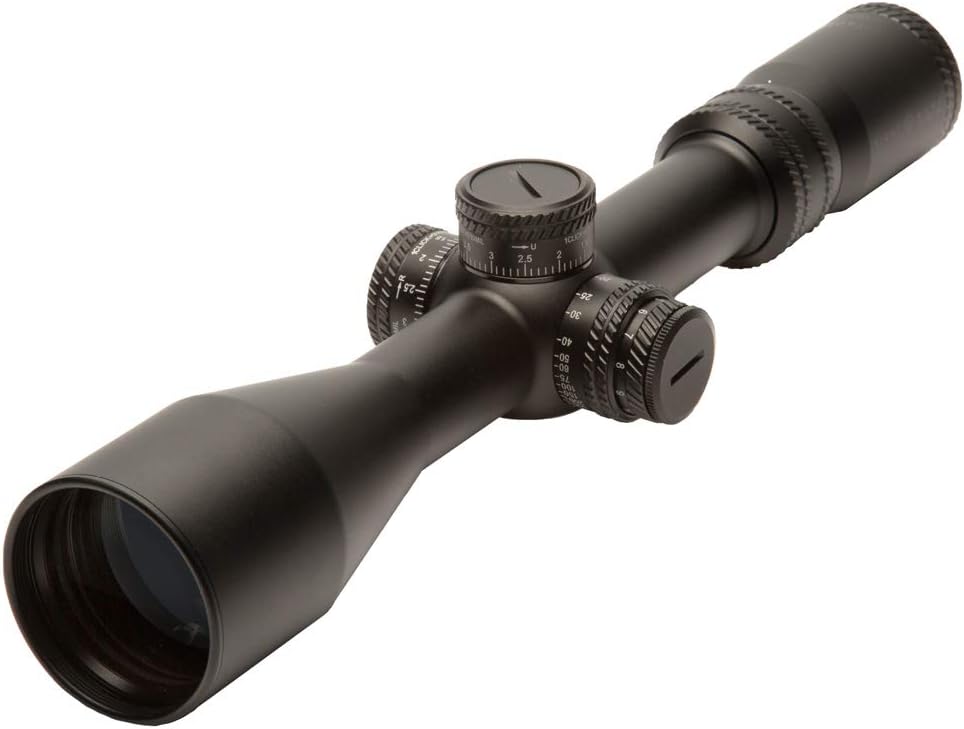
The Sightmark Citadel is often overlooked, but for those strictly watching their wallet while still wanting to stay under the $1000 cap (well under, in fact), it offers a compelling package. It features a 3-18x magnification range, which many find to be the perfect balance for target shooting—enough power to see small targets, but a low enough starting point for a wide field of view. The FFP reticle ensures your holdovers are always accurate, a must-have feature for any serious precision work.
Product Specs
- Magnification: 3-18x
- Objective Lens Diameter: 50mm
- Reticle: LR2 (MIL)
- Tube Size: 30mm
- Focal Plane: First Focal Plane (FFP)
- Weight: 27.3 oz
Pros and Cons
- Pros: Very affordable; includes a throw lever; locking turrets.
- Cons: Glass is not as sharp as the Leupold or Vortex PST; eye box is a bit tight at 18x.
Glass Clarity & ReticleThe glass is respectable for the price, though you will notice some chromatic aberration (purple fringing) around high-contrast targets on bright days. The LR2 reticle is a clean MIL-based design that works well for both holdovers and ranging.
Eye Relief & Eye BoxEye relief is 3.5 to 3.9 inches, which is quite good. However, the eye box is less forgiving than the higher-end options on this list, requiring you to be very precise with your head position at higher magnifications.
DurabilityIt is IP67 waterproof and dustproof. While Sightmark is sometimes viewed as a "budget" brand, the Citadel line is built significantly better than their entry-level offerings and feels solid.
Elevation & Windage KnobsThe turrets are pop-up locking style. The clicks are okay—a bit quieter than I’d like, but they are consistent. For a casual target shooter, they provide plenty of feedback for adjustments.
Magnification & ParallaxThe 6x zoom ratio (3-18) is versatile. Side parallax adjustment allows you to focus as close as 10 yards, which is a fantastic feature for those who might want to use this on a precision air rifle or 22LR.
Mounting & AccessoriesSightmark includes a sunshade and a throw lever in the box. This is a huge value add, as these accessories usually cost another $60-$80 from other brands.
My Personal ExperienceI tested the Citadel on a .224 Valkyrie bolt gun. For shooting steel at 400-600 yards, it performed admirably. I didn't feel like the glass was holding me back from making hits. The included throw lever made it very easy to zip between 3x and 18x during timed drills. It’s a solid "workhorse" optic for someone who wants to spend more money on ammo than on the scope itself.
Online Customer CommentsReviews on Amazon and optics forums suggest that the Citadel is a "sleeper" hit. Users are often surprised by the quality of the turrets and the fact that it comes with so many accessories included.
VerdictA great entry-point into FFP target shooting that includes everything you need to get started right out of the box.
➡️➡️➡️ Explore User Feedback and Current Pricing on Amazon
Vortex Optics Strike Eagle 5-25x56 FFP
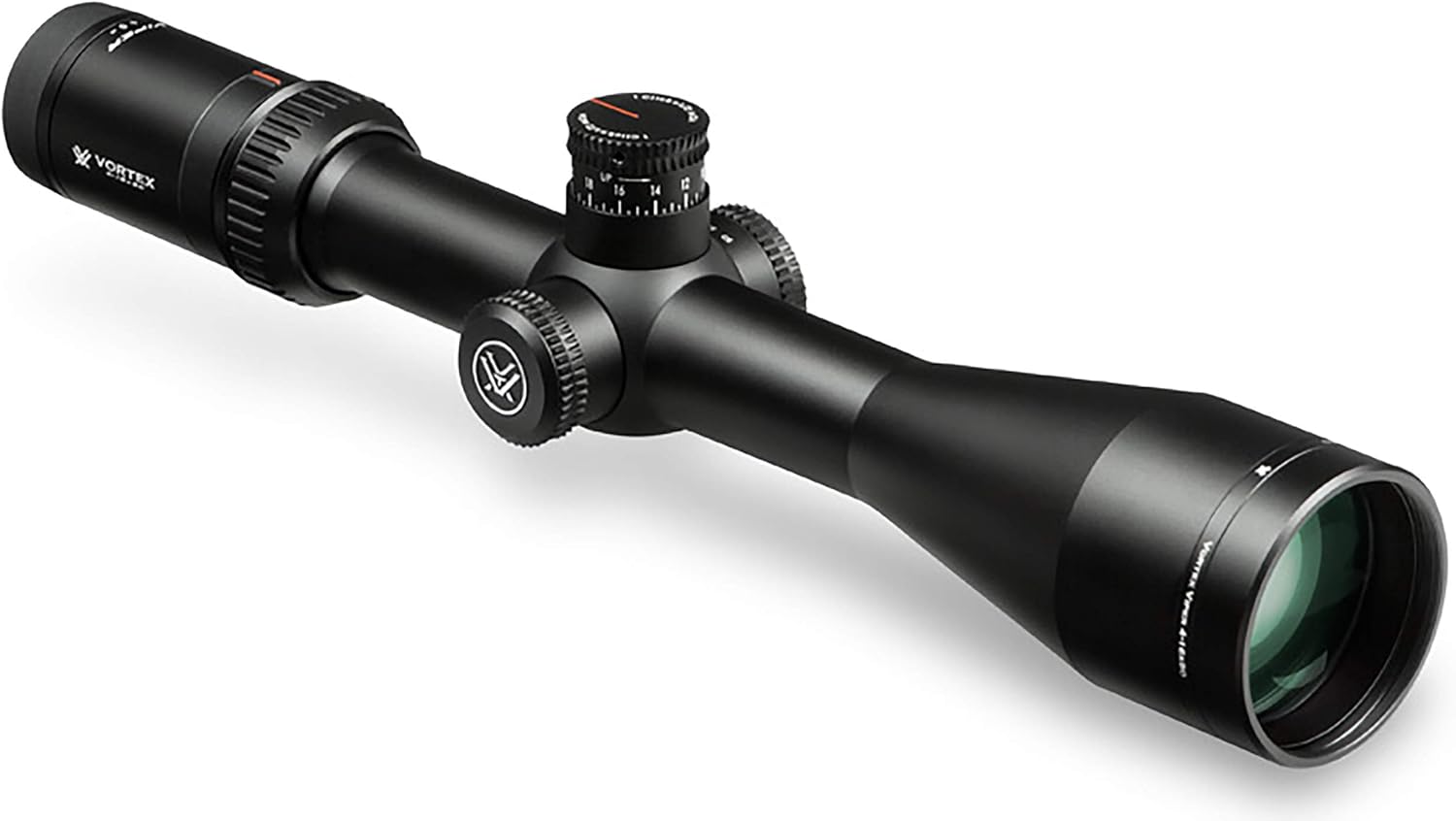
The Strike Eagle 5-25x56 is the big brother to the Viper PST in terms of physical size. Built on a 34mm tube and featuring a massive 56mm objective lens, it is designed to maximize light transmission. This is the best scope for under $1000 for the shooter who finds themselves at the range until the very last minute of legal light. It borrows many features from the higher-end Razor line, including the RevStop Zero System, making it an incredible value for the precision rifle enthusiast.
Product Specs
- Magnification: 5-25x
- Objective Lens Diameter: 56mm
- Reticle: EBR-7C
- Tube Size: 34mm
- Focal Plane: First Focal Plane (FFP)
- Weight: 30.4 oz
Pros and Cons
- Pros: Huge 56mm lens for low light; 34mm tube for more adjustment travel; RevStop Zero System is excellent.
- Cons: Large footprint on the rifle; glass is slightly below the PST Gen II in pure resolution.
Glass Clarity & ReticleThe glass is fully multi-coated and very bright. While the PST Gen II (above) has slightly better color correction, the Strike Eagle’s 56mm objective makes the image appear brighter in dark conditions. The EBR-7C reticle is the gold standard for many shooters.
Eye Relief & Eye BoxEye relief is 3.7 inches, providing a very safe distance for heavy calibers. The eye box is surprisingly wide for a 25x scope, likely thanks to the massive objective lens and 34mm tube diameter.
DurabilityLike all Vortex optics, it is shockproof and waterproof. The finish is a matte black that looks professional and resists reflections that could distract other shooters on the line.
Elevation & Windage KnobsThe turrets are tactical and exposed. They feature the RevStop Zero System, which allows for a rock-solid return to zero and an easy setup process that doesn't require special tools.
Magnification & ParallaxThe 5-25x range covers almost any target shooting scenario. Parallax adjusts down to 15 yards, allowing for close-range practice with rimfire trainers or air rifles.
Mounting & AccessoriesIt requires 34mm rings. It comes with a throw lever and a sunshade, adding to the overall value of the package.
My Personal ExperienceI used the Strike Eagle during a low-light "Midnight Steel" event. While other shooters with 40mm objectives were struggling to see the targets at 500 yards, the 56mm lens on the Strike Eagle kept the image usable well into the twilight. The 34mm tube also meant I had plenty of "dial" left even when shooting at extended ranges. It’s a big scope, but it earns its spot on the rail through sheer capability.
Online Customer CommentsReddit’s r/longrange community often recommends the Strike Eagle for those who can't quite stretch their budget to the Viper PST Gen II or the Razor line. It is widely considered the best "feature-per-dollar" optic Vortex makes.
VerdictThe king of low-light target shooting in the sub-$1000 category, perfect for long-range shooters who need massive adjustment travel.
➡️➡️➡️ Explore User Feedback and Current Pricing on Amazon
How to Choose the Right Scope for This Purpose
Choosing the best scope for under $1000 specifically for target shooting requires a shift in mindset from traditional hunting optics. When your goal is hitting small circles or steel plates at varying distances, three technical factors become non-negotiable: the Focal Plane, the Turret Quality, and the Reticle Design.
1. First Focal Plane (FFP) vs. Second Focal Plane (SFP)
For target shooting, I almost always recommend a First Focal Plane scope. In an FFP scope, the reticle grows and shrinks as you change magnification. This means the hash marks (MIL or MOA) represent the same physical distance on the target whether you are at 5x or 25x. This allows you to accurately hold over for wind and elevation at any zoom level. SFP scopes are often cheaper and have a reticle that stays the same size, but their holdovers are only accurate at one specific magnification (usually the highest), which can be limiting in dynamic shooting environments.
2. Mechanical Tracking and Zero Stops
A target scope is "worked" harder than a hunting scope. You will be spinning the elevation dial up for a 600-yard shot and then back down for a 100-yard shot. The internal gears must be precise; if you dial 5 MILs, the point of impact must move exactly 5 MILs. This is called "tracking." Additionally, look for a "Zero Stop." This mechanical feature prevents you from dialing below your zero, allowing you to return to your baseline 100-yard mark by feel alone, without looking at the turrets.
3. Tube Diameter and Objective Lens
Under $1000, you will see both 30mm and 34mm tubes. A 34mm tube isn't necessarily "clearer," but it provides more internal space for the reticle to move, giving you more elevation travel for extremely long shots. Pair this with a 50mm or 56mm objective lens to ensure enough light reaches your eye, especially at high magnification where the "exit pupil" (the beam of light hitting your eye) becomes very small.
FAQs
1. Is a $1000 scope really that much better than a $300 scope?
Yes. The difference is found in "tracking" and "edge-to-edge clarity." A $300 scope might look clear in the center, but the edges will be blurry, and if you dial the turrets, they may not return to the exact same spot. A $1000 scope offers mechanical reliability you can trust with your life (or your match score).
2. Should I choose MOA or MRAD for target shooting?
Both work, but MRAD (Milliradians) is the current standard for precision target shooting. It’s based on a base-10 system, which many find easier for quick math. Most modern "Christmas tree" reticles and professional matches use MRAD.
3. What is "Parallax" and why do I need to adjust it?
Parallax occurs when the reticle and the target are on different focal planes. If you move your head and the reticle seems to "shift" on the target, your parallax is out. A side-adjust knob allows you to sync them, which is vital for precision at high magnification.
4. Do I need an illuminated reticle?
For target shooting, it's nice but not always necessary. It helps when shooting at dark targets or in the shadows, but for bright daytime range use, a non-illuminated etched reticle is perfectly fine.
5. Can I use these scopes for hunting too?
Absolutely. However, be aware that target scopes (especially those with 34mm tubes) are much heavier than dedicated hunting scopes. If you are hiking miles in the mountains, you might find a 30 oz scope to be a burden.
Conclusion
Investing in the best scope for under $1000 is the single best upgrade you can make to a precision rifle system. While a rifle provides the accuracy potential, the optic allows you to realize that potential through clear observation and repeatable mechanical adjustments. Whether you choose the all-around excellence of the Vortex Viper PST Gen II, the massive light-gathering power of the Strike Eagle, or the mechanical "click" perfection of the Arken EP5, each of these optics offers a level of performance that was considered "high-end professional" only a decade ago. Focus on your specific needs—whether it's weight, low-light performance, or turret feel—and you will find that a sub-$1000 optic can truly go the distance.