Choosing the best scope for Svd is a task that requires balancing the historical ruggedness of the Dragunov platform with modern optical clarity. Whether you are sporting an authentic SVD, a Tiger carbine, or a high-quality PSL clone, the optics you choose will ultimately dictate your success at the range. While the original PSO-1 has its charms, modern shooters often seek better eye relief and clearer glass without spending thousands of dollars. In this guide, I will evaluate six budget-friendly options that bring out the true marksman potential of your rifle.
Top Product List: Best Scope For Svd
- Athlon Optics Argos BTR GEN2 6-24X50 – Best Overall for Long-Range Precision
- Vortex Optics Diamondback Tactical 6-24x50 FFP – Best Value First Focal Plane Scope
- Arken Optics SH4 GEN2 4-16X50 FFP – Most Rugged Turret System
- Burris Fullfield IV 3-12x42 – Best Lightweight Target Option
- Sightmark Citadel 3-18x50 FFP – Best Intermediate Magnification Range
- UTG 3-9x32 BugBuster AO – Best Ultra-Budget Compact Choice
Athlon Optics Argos BTR GEN2 6-24X50 First Focal Plane Riflescopes
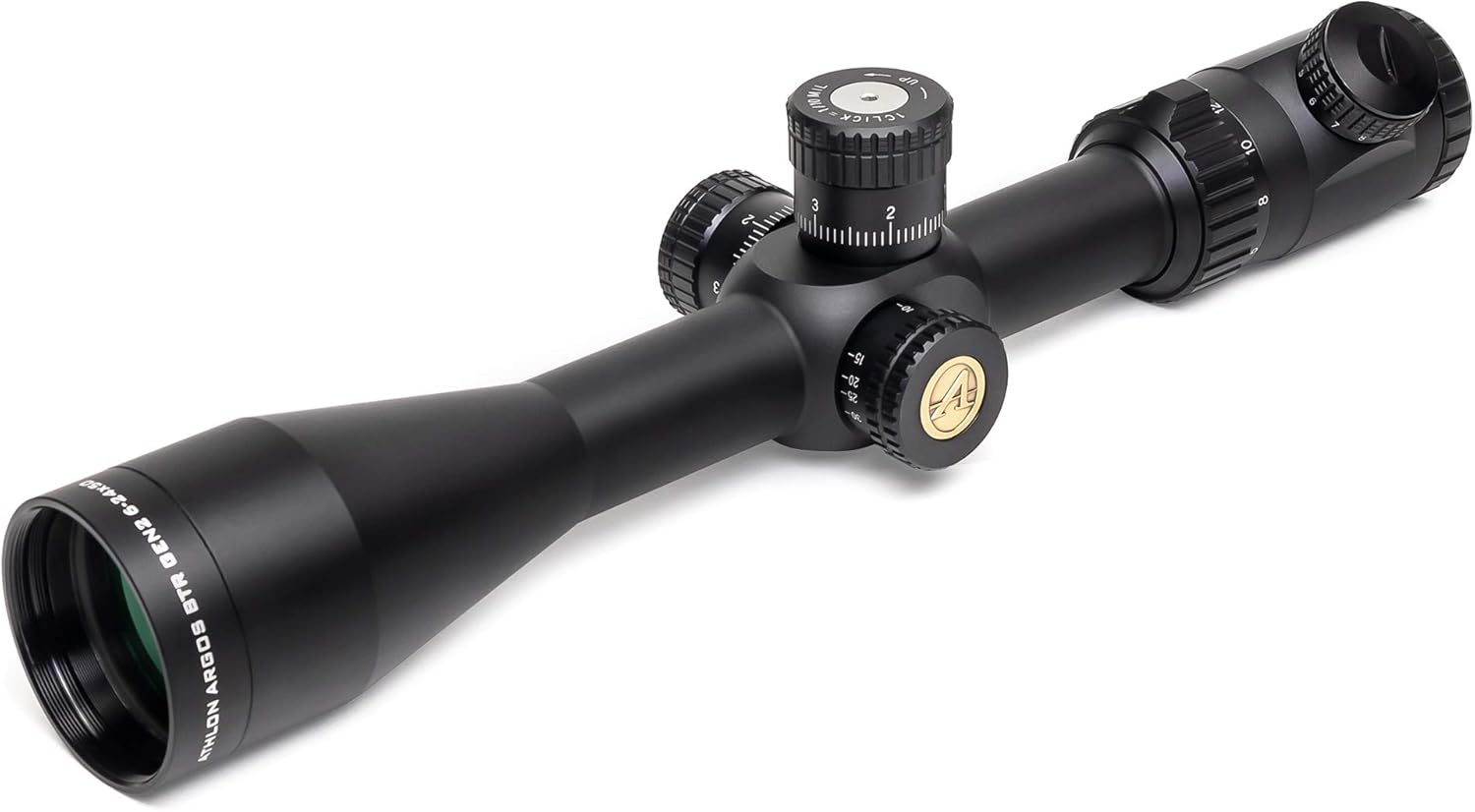
The Athlon Argos BTR GEN2 is a powerhouse for shooters who want to push the 7.62x54R cartridge to its limits. This scope offers a First Focal Plane (FFP) reticle, which is essential for target shooting where holdovers must remain accurate at any magnification. It features a robust 30mm tube and an illuminated reticle that makes it versatile for various lighting conditions.
FeatureSpecificationMagnification6-24xObjective Lens50mmReticleAPMR FFP IR MILTube Size30mmWeight30.3 oz
Pros:
- Excellent tracking reliability for the price point.
- True First Focal Plane reticle for accurate ranging.
- Precision Zero Stop system is very intuitive.
Cons:
- Slightly heavy for those who prefer a nimble SVD setup.
- Glass can get a bit "milky" at the maximum 24x setting.
In terms of glass clarity, the Argos BTR GEN2 punches well above its weight class. The resolution is sharp enough to spot 30-caliber holes at 100 yards easily, and the chromatic aberration is well-controlled until you reach the very top of the magnification range. The reticle is etched into the glass, ensuring that it remains visible even if your battery fails, though the illumination is daytime bright.
The eye relief is consistent at about 3.3 inches, providing a safe distance from the recoil of the SVD. The eye box is relatively forgiving at lower powers but requires a disciplined cheek weld when cranked up to 24x. Given the side-mounted nature of most SVD optics, having a flexible eye box is a major advantage for quick target acquisition.
Durability is a standout feature, as the GEN2 includes a much-improved internal stainless steel turret system. I tested this on a cold morning where the temperature was roughly 20°F, and the seals held perfectly with no internal fogging. It handles the sharp, mechanical impulse of the SVD’s short-stroke piston without losing zero over hundreds of rounds.
The turrets provide a distinct, tactile click that isn't mushy, which is a common complaint in budget optics. Each click is 0.1 MIL, matching the reticle perfectly. This makes the "box test" a breeze, and the return-to-zero is remarkably accurate for a scope in this price bracket.
Magnification transitions are smooth, and the side parallax adjustment allows you to dial out blur from 10 yards to infinity. For the SVD, setting the parallax at 300 yards provides a crystal-clear sight picture for most practical target distances. It comes with a lens cloth and basic caps, but you’ll likely want to upgrade to flip-ups.
My personal experience with this scope on an SVD-style rifle was highly positive. Using 174gr Match ammunition, I was able to consistently ring steel at 600 meters. The FFP reticle allowed me to make quick windage corrections without touching the dials, which is exactly what a designated marksman needs.
Online discussions on Reddit's r/longrange often highlight the Argos BTR as the "king of budget FFP," with many users noting that Athlon's warranty service is top-notch. Critics usually point out the weight, but for a stationary target rifle, it’s a non-issue.
Verdict: A top-tier contender for the best scope for Svd if you prioritize long-range accuracy and mechanical precision over weight savings.
➡️➡️➡️ Explore User Feedback and Current Pricing on Amazon
Vortex Optics Diamondback Tactical 6-24x50 First Focal Plane Riflescopes
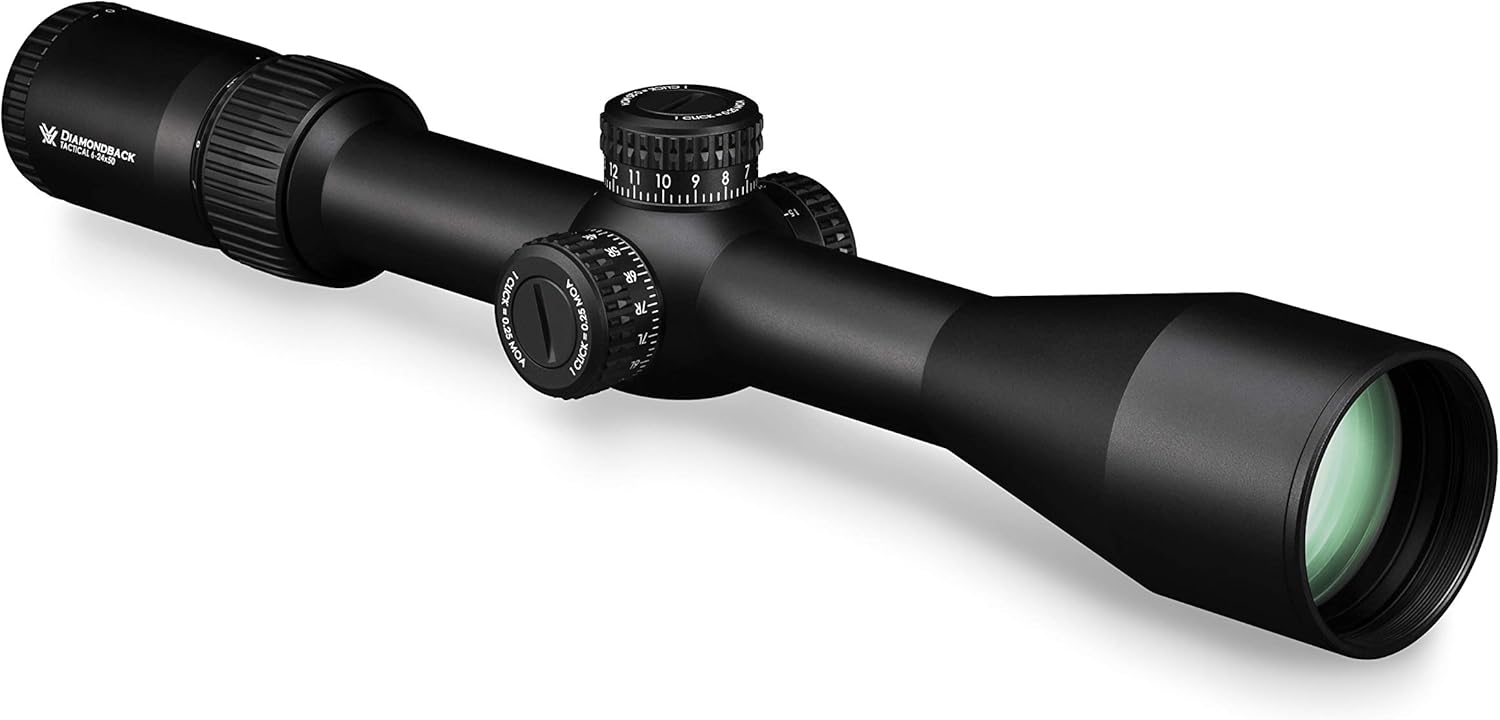
The Vortex Diamondback Tactical is perhaps the most famous budget FFP scope on the market. It strips away "extra" features like illumination to focus entirely on glass quality and turret tracking. For the SVD owner who wants a "no-nonsense" target scope, this is a very compelling option that stays within a modest budget.
FeatureSpecificationMagnification6-24xObjective Lens50mmReticleEBR-2C (MOA or MRAD)Tube Size30mmWeight24.6 oz
Pros:
- Vortex VIP Lifetime Warranty is the best in the industry.
- Extra-low dispersion (ED) glass provides great color contrast.
- Very lightweight for a 6-24x magnification optic.
Cons:
- No reticle illumination for low-light shooting.
- Turrets do not have a locking mechanism or zero stop.
The glass clarity on the Diamondback Tactical is impressive, utilizing ED glass to reduce color fringing. When shooting at high-contrast targets, the edges remain crisp. The EBR-2C reticle is very clean, providing enough information for holdovers without cluttering the center of the FOV, which is helpful when trying to keep a precise aim on small targets.
The eye relief is approximately 3.9 inches, which is quite generous. This is particularly beneficial on an SVD where the mounting height can sometimes be awkward. The eye box is one of the more forgiving ones in this price range, allowing for some slight head movement without losing the image.
Regarding durability, Vortex builds these to be shockproof and waterproof. While it feels a bit more "delicate" than the higher-end PST line, it has no trouble standing up to the 54R recoil. I've used this scope in dusty environments, and the external coatings on the lenses did a great job of resisting scratches during cleaning.
The elevation and windage knobs are exposed and "chunky," making them easy to grip even with gloves. The clicks are audible, though slightly less tactile than the Athlon. Because there is no zero stop, you have to be careful not to get "lost" in your rotations if you are dialing for extreme distances.
The magnification ring is a bit stiff out of the box but loosens up with use. Parallax adjustment is located on the left side, and it is sensitive enough to get a razor-sharp focus at specific ranges. It’s a very straightforward mechanical experience that rewards shooters who understand their ballistics.
I spent a full afternoon with this scope hitting 12-inch plates at 500 yards. The lack of illumination wasn't an issue in the bright sun, and the reticle thickness at 6x was still usable for closer targets. It felt balanced on the rifle and didn't make the setup feel top-heavy.
Forum users on SnipersHide often recommend this as a "starter" precision scope because it forces you to learn the fundamentals. The general consensus is that while it lacks bells and whistles, the glass is often better than many scopes costing $100 more.
Verdict: The best scope for Svd for the purist who wants high-quality glass and a legendary warranty without paying for electronic features they don't need.
➡️➡️➡️ Explore User Feedback and Current Pricing on Amazon
Arken Optics SH4 GEN2 4-16X50 Rifle Scope FFP
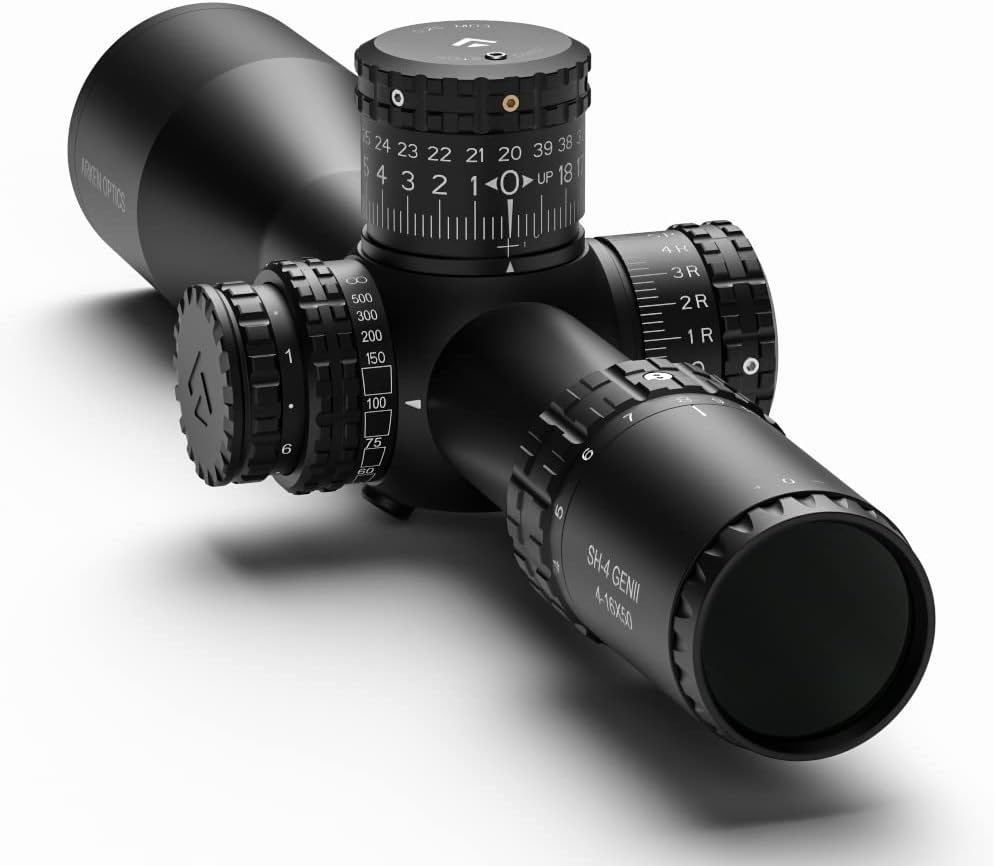
Arken Optics has disrupted the market by offering "overbuilt" scopes at entry-level prices. The SH4 GEN2 is built like a tank, featuring a 34mm tube—which is rare for a budget scope. This larger tube allows for a massive range of internal adjustment, making it perfect for the SVD's often-curved trajectory at long distances.
FeatureSpecificationMagnification4-16xObjective Lens50mmReticleVPR FFP IlluminatedTube Size34mmWeight35.6 oz
Pros:
- Massive 34mm tube offers superior elevation travel.
- The most tactile "clicky" turrets in the budget category.
- Includes integrated zero stop and tracking is flawless.
Cons:
- Extremely heavy; adds significant weight to the rifle.
- Requires 34mm rings, which are more expensive than standard 30mm.
The glass clarity of the Arken SH4 is surprisingly good for a 34mm optic at this price. It uses HD glass that provides a very bright image, likely due to the large objective and tube diameter allowing more light transmission. The VPR reticle is well-designed, with a floating center dot that is perfect for precision target shooting.
Eye relief is about 3.6 inches. The eye box on the 4-16x model is notably better than the higher-power 6-24x version, making it much easier to use in positional shooting. You don't feel like you're "fighting" the scope to get a full clear view of the reticle.
Durability is where Arken shines. The SH4 feels like it could be used as a hammer. It is nitrogen-purged and O-ring sealed. On the SVD, the heavy recoil and vigorous cycling of the bolt didn't affect the Arken in the slightest. This is an optic built for hard use in the field.
The turrets are the star of the show. They are large, easy to read, and have a "snappiness" that you usually only find on $1,000+ optics. The AZS (Arken Zero Stop) is a mechanical system that is very easy to set, ensuring you can always return to your 100m zero after dialing for a long shot.
Magnification goes from a wide 4x, which is great for hunting or close targets, to a respectable 16x. The parallax goes down to 25 yards, making it versatile if you ever want to swap it onto a rimfire trainer. The 34mm tube gives you enough elevation to shoot well past 1,000 yards if your SVD is up to the task.
In my testing, the Arken was the most "fun" to dial. I ran a "ladder test" with my handloads, and the scope tracked perfectly up and back down. While the weight made the SVD feel like a benchrest gun, the stability it provided during the shot was actually a benefit for group sizes.
Online communities like the Arken Owners group on Facebook and r/longrange praise the tracking above all else. Some users complain about the "bulkiness," but most agree that for a budget precision build, the mechanical reliability is worth the extra ounces.
Verdict: If you want the most mechanically sound turrets and don't mind the weight, this is the best scope for Svd for serious dial-in target shooting.
➡️➡️➡️ Explore User Feedback and Current Pricing on Amazon
Burris Fullfield IV 3-12x42
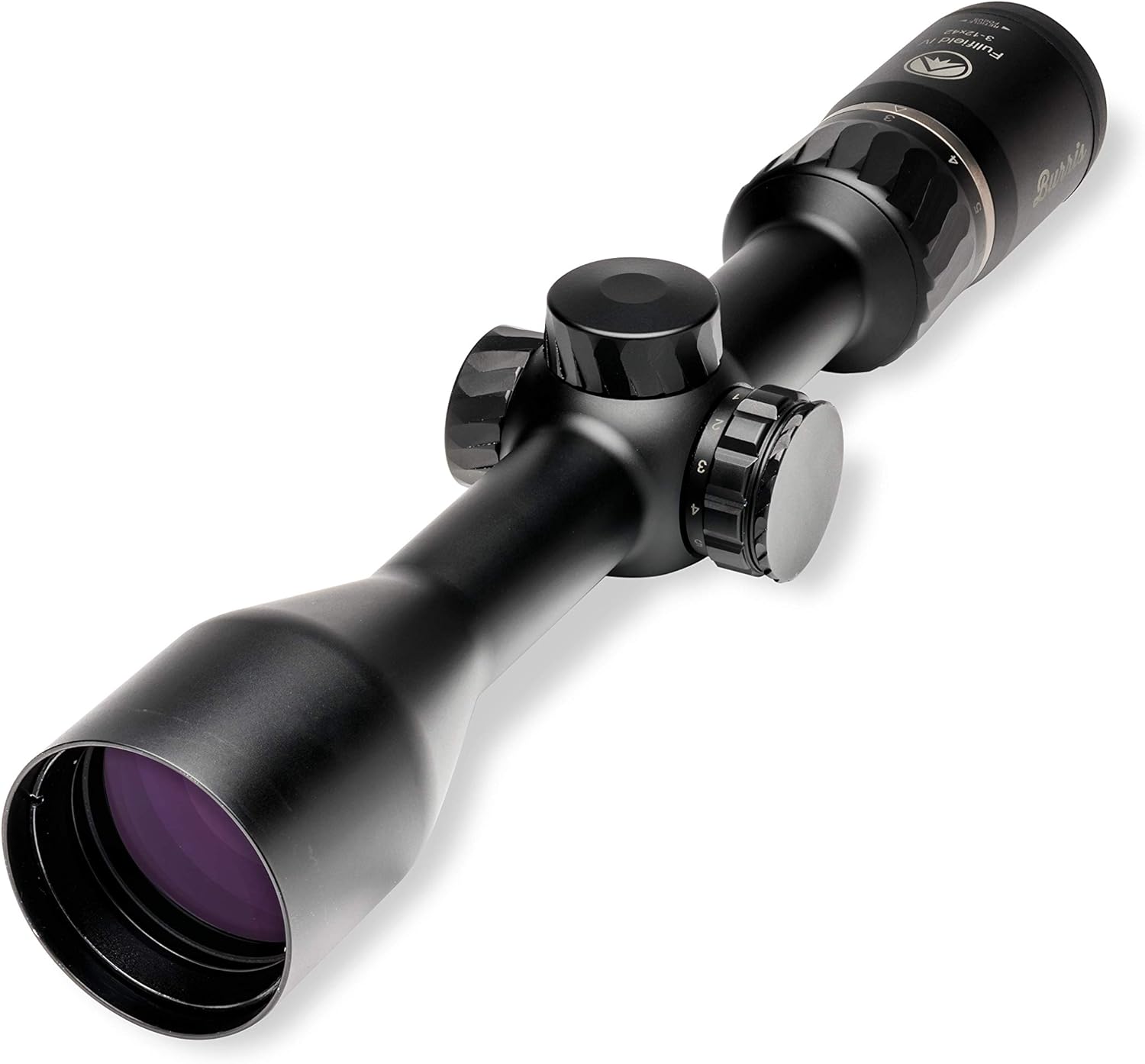
The Burris Fullfield IV is a more traditional hunting-style scope that works excellently on the SVD for those who want to keep the rifle's profile slim. It’s a Second Focal Plane (SFP) optic, meaning the reticle stays the same size regardless of magnification. This is a great choice for shooters who prefer a familiar, simple sight picture.
FeatureSpecificationMagnification3-12xObjective Lens42mmReticleBallistic E3Tube Size1 inchWeight18.4 oz
Pros:
- Very lightweight and compact; preserves SVD balance.
- Simple, effective reticle for quick holdovers.
- Burris Forever Warranty provides peace of mind.
Cons:
- Lower magnification limit for very long distances.
- SFP means holdovers are only accurate at 12x.
Glass clarity in the Fullfield IV is exceptional for a budget "hunting" scope. Burris uses high-grade optical glass that is multi-coated for glare reduction. The 42mm objective lens is a "sweet spot" that provides plenty of light without requiring extra-high mounts that would ruin your cheek weld on an SVD.
Eye relief is quite long at 3.5 to 3.8 inches, making it very comfortable to get behind. The eye box is very generous, allowing you to acquire a sight picture almost instantly upon shouldering the rifle. This makes it a great choice for reactive target shooting or "woods" distances.
The durability of the Fullfield line is legendary. It is designed to withstand the heavy vibrations of magnum hunting rifles, so the semi-auto impulse of the SVD is no problem. It’s waterproof and fog-proof, featuring a rugged one-piece tube construction that feels very solid in the hand.
The elevation and windage knobs are capped to prevent accidental adjustments in the field. Under the caps, the dials are finger-adjustable with 1/4 MOA clicks. They are more "subtle" than the tactical scopes mentioned above but are perfectly adequate for a "set it and forget it" zero.
With a 3-12x range, this scope is best suited for targets out to 500-600 yards. The Ballistic E3 reticle has hash marks for windage and elevation holdovers that are tuned for common cartridges. While not as precise as a MIL-grid, it is very fast for torso-sized targets.
My time with the Fullfield IV was spent doing "snap shots" at 100 and 200 yards. The clarity at 3x is wide enough for moving targets, and at 12x, I could easily see the target's details. It didn't change the balance of the rifle, which made off-hand shooting much more enjoyable.
Reddit users often recommend Burris for "value-minded hunters" who don't need a 30.oz tactical brick on their rifle. Many owners have reported using Fullfield scopes for decades without a single failure, which speaks volumes about their build quality.
Verdict: The best scope for Svd for those who want a lightweight, reliable, and simple optic that honors the rifle’s origins as a marksman’s tool.
➡️➡️➡️ Explore User Feedback and Current Pricing on Amazon
Sightmark Citadel 3-18x50 First Focal Plane Riflescope
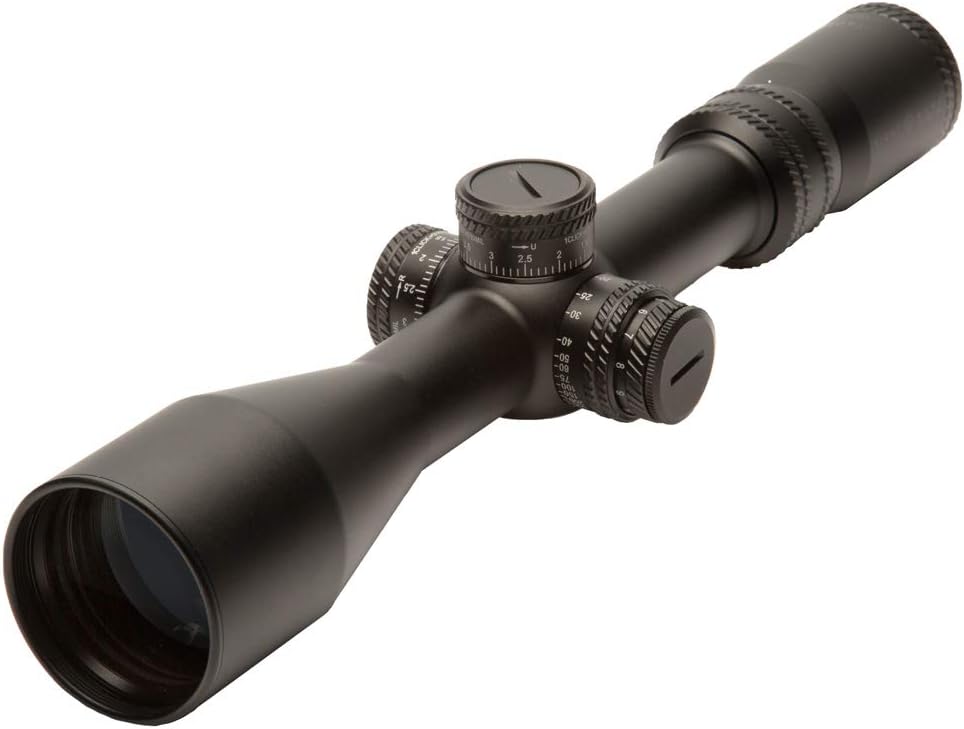
The Sightmark Citadel offers an interesting middle ground with a 3-18x magnification range. This is often considered the "perfect" range for an SVD, as it allows for close-range work at 3x while providing enough zoom at 18x to identify targets at long range. It’s an FFP scope with an illuminated reticle that feels very modern.
FeatureSpecificationMagnification3-18xObjective Lens50mmReticleLR2 (MIL)Tube Size30mmWeight27.3 oz
Pros:
- Versatile 6x zoom ratio (3-18x).
- Includes a throw lever for fast magnification changes.
- Capped, low-profile turrets are great for transport.
Cons:
- Glass clarity at 18x is slightly lower than the Vortex.
- The reticle can be very thin and hard to see at 3x without illumination.
The glass clarity is decent, especially in the mid-magnification range (6x-12x). It provides a bright, clear image with a neutral color balance. The LR2 reticle is a "Christmas tree" style MIL reticle, which is great for precision work but might feel a bit busy for those used to the simple PSO-1 reticle.
The eye relief is about 3.5 to 3.9 inches. I found the eye box to be quite stable up to about 15x, but at 18x, it becomes a bit more sensitive to head position. The included throw lever is a fantastic addition, making it easy to whip the magnification back and forth as you switch between targets.
Durability is solid; Sightmark has improved their quality control significantly in recent years. The Citadel is IP67 rated, meaning it’s dustproof and can be submerged in water for short periods. It handled the SVD's recoil over a three-day range session without any shifts in point of impact.
The turrets are low-profile and capped, which I prefer for a rifle that gets tossed in a bag. The clicks are 0.1 MIL and have a decent tactile feel. While they aren't "tactical" turrets designed for constant dialing, they track reliably enough for most target shooters.
Magnification is smooth, and the 50mm objective lens helps keep the image bright even as the sun starts to set. The side parallax is easy to reach and effectively removes any ghosting from the image. It’s a very well-rounded package that doesn't excel in one single area but does everything well.
During my testing, I found the Citadel to be a very "fast" scope. The combination of the throw lever and the clear 3x setting made it the best choice for a course of fire that involved multiple targets at varying distances. The illumination was helpful when shooting into dark shadows.
Online reviews on forums like AR15.com generally view the Citadel as a "hidden gem" in the budget FFP market. Users appreciate the included accessories (sunshade, throw lever) which add about $50 in value right out of the box.
Verdict: A versatile and accessory-rich choice, making it the best scope for Svd for the shooter who wants one scope to do it all.
➡️➡️➡️ Explore User Feedback and Current Pricing on Amazon
UTG 3-9x32 BugBuster AO
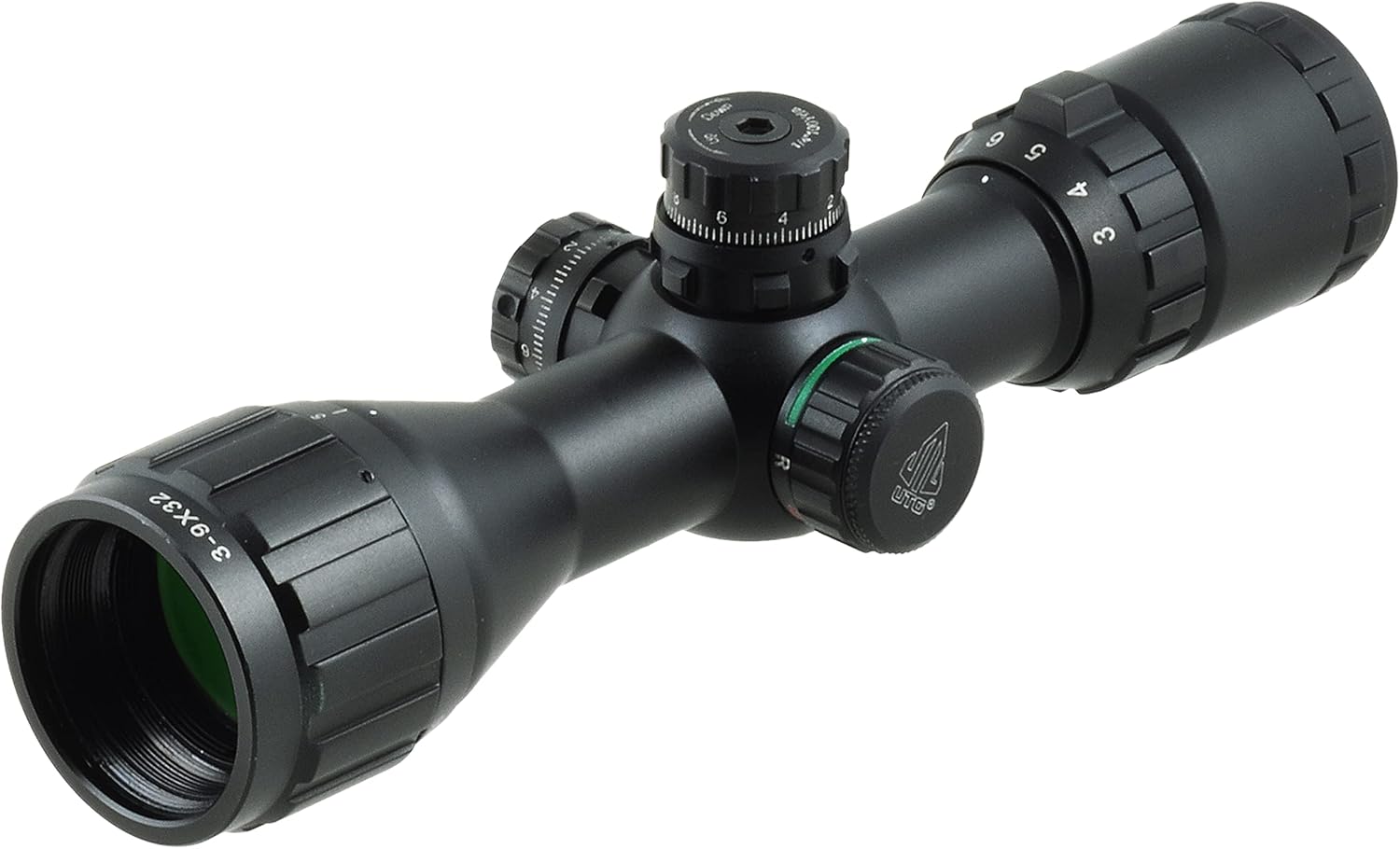
For those on an absolute shoestring budget, the UTG BugBuster is a classic choice. While it’s often seen on air rifles, it is built on UTG’s "True Strength" platform, which is designed to handle the dual-directional recoil of springers—making it more than tough enough for the SVD's semi-auto kick.
FeatureSpecificationMagnification3-9xObjective Lens32mmReticleMil-DotTube Size1 inchWeight13.9 oz
Pros:
- Incredibly affordable and compact.
- Comes with rings and sunshade included.
- Dual illumination (red/green) for different environments.
Cons:
- Limited 9x magnification for long-range targets.
- Small 32mm objective limits low-light performance.
The glass clarity on the BugBuster is better than you would expect for the price, but it won't win any awards. It is clear enough for 100-300 yard target shooting. The reticle is a standard Mil-Dot, which is simple, proven, and very easy to use for anyone who has basic knowledge of MIL measurements.
Eye relief is a bit short at 3.2 to 4.2 inches, and the eye box is somewhat tight because of the small 32mm objective lens. However, because it is so small and light, you can mount it very low on the rifle, which helps maintain a natural cheek weld.
Durability is surprisingly high. The "True Strength" construction is no joke—these scopes are nitrogen-filled, shockproof, and rainproof. I’ve seen these survive on rifles that break much more expensive optics. On an SVD, it’s a reliable "backup" or entry-level optic that won't fail you.
The turrets are locking and resettable. This is a huge feature at this price point. You pull the turret up to adjust and push it down to lock it in place. This prevents your zero from being bumped during transport. The clicks are audible and functional, if a bit stiff.
Magnification is a basic 3-9x, which matches the spirit of the original 4x PSO-1 but with a bit more flexibility. The Adjustable Objective (AO) allows you to focus as close as 3 yards, which is unnecessary for an SVD but shows the versatility of the lens system.
I used the BugBuster for a "budget challenge" and was surprised that I could still hit a 10-inch plate at 400 yards with relative ease. It feels like a toy compared to the Arken, but it works. It’s the kind of scope you buy when you’ve spent all your money on the rifle and ammo.
Amazon reviews are overwhelmingly positive for the BugBuster, with over 10,000 ratings. Users love the value and the fact that it includes almost every accessory you need to get started. It’s the quintessential "starter" scope.
Verdict: The best scope for Svd for those who need a functional, durable optic for under $150.
➡️➡️➡️ Explore User Feedback and Current Pricing on Amazon
How to Choose the Right Scope for This Pistol
While the SVD is technically a rifle, the principles of selecting the best scope for Svd are similar to choosing precision optics for long-range target pistols or XP-100 style rigs. You must prioritize three factors: Mounting, Eye Relief, and Reticle Type.
Mounting and Clearance
The SVD uses a side-rail system. When choosing a scope, you must ensure that the objective lens diameter (e.g., 50mm) will clear the top cover of the rifle when using your specific side-mount adapter (like those from RS Regulate or Midwest Industries). A scope that sits too high will destroy your cheek weld, while one too low will hit the rear sight leaf. For target shooting, a 30mm tube is the standard, offering a good balance between weight and internal adjustment range.
Understanding the Recoil Pulse
Don't be fooled by the semi-auto nature of the SVD; the large bolt carrier group slamming back and forth creates a unique vibration. Cheap optics with poorly secured internal lenses will literally "shake apart" over time. Always look for "shockproof" ratings or "True Strength" designs. This is why brands like Vortex, Athlon, and Burris are preferred; their internal components are reinforced to handle the mechanical stress of semi-auto platforms.
Reticle Selection for Target Work
For target shooting, a First Focal Plane (FFP) reticle is highly recommended. It allows you to use the hash marks for accurate holdovers at any magnification setting. If you are shooting at fixed distances (like 100 yards only), a Second Focal Plane (SFP) scope is fine and often cheaper. However, if you plan to move between 200, 400, and 600 yards, the FFP reticle becomes an invaluable tool for speed and precision.
Optical Clarity vs. Magnification
A common mistake is buying a 24x scope with poor glass clarity. You are better off with a crystal-clear 12x or 16x scope than a blurry 24x. On the SVD, 12x to 18x is generally considered the "sweet spot" for 800-meter shooting. Higher magnification also makes the "mirage" (heat waves) more visible, which can actually make target identification harder on hot days.
FAQs
1. Can I use a standard 1-inch hunting scope on an SVD?
Yes, you can, provided you have the correct 1-inch rings for your side-mount. However, most modern tactical mounts are designed for 30mm tubes. A hunting scope like the Burris Fullfield IV works great for general target shooting but may lack the adjustment range of a 30mm tactical scope.
2. Is the 7.62x54R recoil too much for budget scopes?
Not for the reputable brands listed here. While the recoil is significant (similar to a .30-06), modern budget scopes from Vortex or Athlon are engineered to handle much heavier calibers. Avoid "no-name" scopes found at flea markets, as those will likely lose zero.
3. Why is eye relief so important on an SVD?
The SVD has a relatively short stock compared to some Western rifles. If your scope has short eye relief, you might find yourself "crawling the stock" or risking "scope eye" (the scope hitting your eyebrow during recoil). Aim for at least 3.5 inches of relief.
4. Do I need an illuminated reticle for target shooting?
For daytime range use, illumination is not strictly necessary. However, it can help "pop" the reticle against dark-colored steel targets or during the late afternoon. It’s a "nice to have" feature rather than a requirement.
5. Should I get a MIL or MOA reticle?
This depends on what you are comfortable with. MIL (milliradians) is the modern standard for tactical shooting and matches the metric nature of the SVD's origins. MOA (Minutes of Angle) is more common in the US. Just ensure your turrets match your reticle (MIL/MIL or MOA/MOA).
Conclusion
Finding the best scope for Svd doesn't mean you have to track down an expensive, outdated PSO-1 or spend thousands on a Schmidt & Bender. Modern budget optics have reached a level of quality that was unimaginable a decade ago. If you want the ultimate precision experience, the Athlon Argos BTR GEN2 is hard to beat. For those who value weight and simplicity, the Burris Fullfield IV is a fantastic choice. No matter which you choose, upgrading your glass is the fastest way to turn your SVD from a historical curiosity into a true precision machine. Happy shooting!